Genset Digest / Certification & Standards / Manufacturers explained
Generator Manufacturers Explained
Ask who made a generating set and three different answers can all be true. The engine came from an engine maker, the set was built by an assembler, the unit was sold by a distributor. Which one you are talking to decides what you can ask, and who pays when something fails.
Ask who made a generating set and you will get three different answers depending on who you ask, and all three can be true at once. The engine came from an engine maker. The set was built by an assembler. The unit was sold by a distributor. Understanding which of the three you are talking to changes what you can reasonably ask them, and what they are actually responsible for when something goes wrong.
This is not a pedantic distinction. It decides the warranty route, the parts route and the technical authority behind every figure in a quotation.
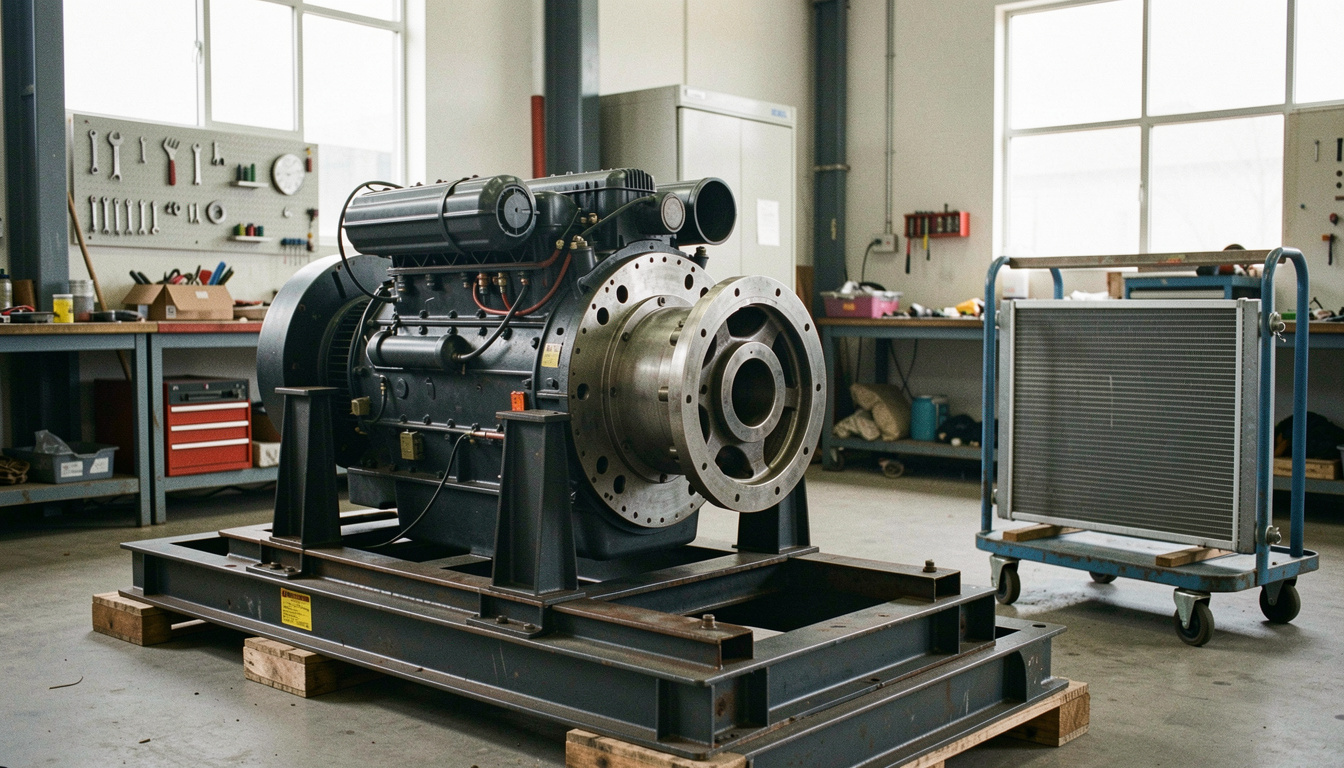
The engine OEM
The engine manufacturer designs and builds the prime mover, publishes its performance data under ISO 3046, sets the service intervals, holds the emission certification for the engine, and runs a parts and service network. What it does not generally do, in this market, is build the generating set. Cummins, Perkins, Volvo Penta, Weichai, Yuchai and SDEC all supply engines to set builders, and the platform pages in the generator set section are organised around exactly that: what the engine contributes and what it does not.
The alternator has its own manufacturer, separate again, and it is the component most often ignored in a comparison. Two sets with the same engine can behave differently on a non-linear or unbalanced load because the alternators differ in winding pitch, reactance and insulation class.
| Role | Supplies | Responsible for | Ask them about |
|---|---|---|---|
| Engine OEM | The engine | Engine performance and emission data | Service intervals, engine parts, ratings |
| Alternator maker | The alternator | Electrical machine performance | Insulation class, reactance, winding |
| Genset assembler | The complete set | Set rating, coupling, cooling, controls | The rating plate, the FAT report |
| Distributor | The sold unit | Supply, commissioning, local support | Lead time, spares held, service cover |
| Service contractor | Maintenance | Keeping it running | Response time, technician training |
The genset assembler
The assembler is the party that actually creates the machine you buy. It selects the engine and the alternator, couples them on a base frame, specifies the radiator for a stated ambient capability, fits the control system and the circuit breaker, builds or buys the canopy or container, adds the base fuel tank, and, crucially, declares the rating of the finished set.
That last act is the one to understand. The engine maker rates the engine in kilowatts of mechanical output at a stated speed and condition. The set rating in kVA, under a stated duty class, is the assembler's declaration, and it is what appears on the rating plate. This is why two sets built on the same engine can be advertised at different outputs, and why the duty class next to the number matters as much as the number itself.
In most arrangements the engine carries the engine maker's warranty through its own service network, while the set as a whole, the coupling, the cooling package, the controls and the enclosure, carries the assembler's warranty. A fault has to be attributed to one or the other before anyone pays, which is why the commissioning report and the load test record matter so much. Both are covered in the documentation pages.
The distributor
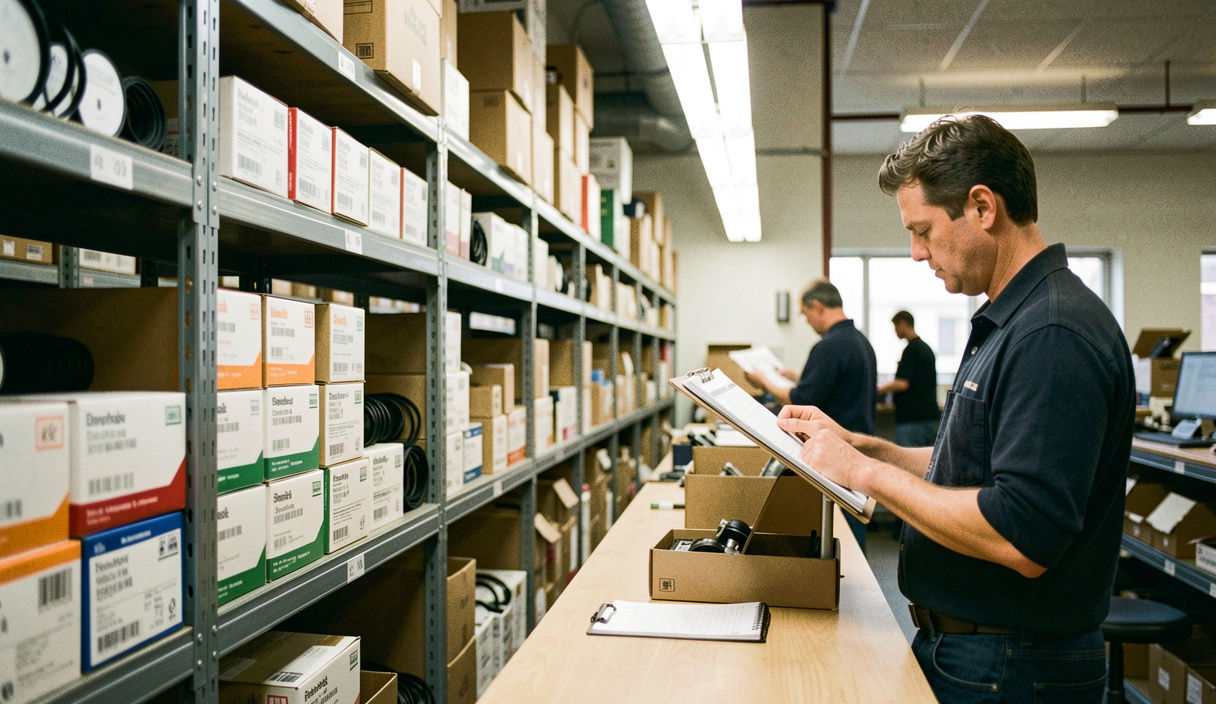
A distributor buys finished sets and resells them, usually adding delivery, commissioning, a local service capability and a stock of parts. A good one is worth a great deal on a site far from anywhere, because the practical availability of a filter or an injector at short notice is what decides downtime. A distributor with no stock and no technicians adds a margin and a phone number.
The question to ask is concrete rather than commercial: which parts are held locally, how many trained technicians, what response time is contractually offered, and for which engine families. On export projects that answer often matters more than the specification, as set out in the international case studies section.
Reading a quotation with this in mind
Four questions separate comparable offers from incomparable ones. Which engine model and which alternator model, by their full designations, not by brand alone. Which duty class the quoted kVA figure belongs to. At what ambient and altitude the rating was corrected for. And who carries the warranty for each part of the machine.
Where an offer includes an engine brand authorisation document, the page on what an OEM authorisation letter actually certifies sets out what it does and does not tell you. The wider set of certificates and standards that appear in these documents is explained in the certification and standards page, and the arithmetic behind the kVA figure itself is in the sizing method.
Read next
If an offer arrives with an authorisation letter attached, read what an OEM authorisation actually certifies before treating it as a quality mark.
For the vocabulary of certificates and product standards that fills these documents, see certification and standards in generator manufacturing.
To check whether the quoted output is right for the load in the first place, work through the sizing method, then compare platforms in the generator set section.