Section index · international case studies · July 18, 2026
International Case Studies
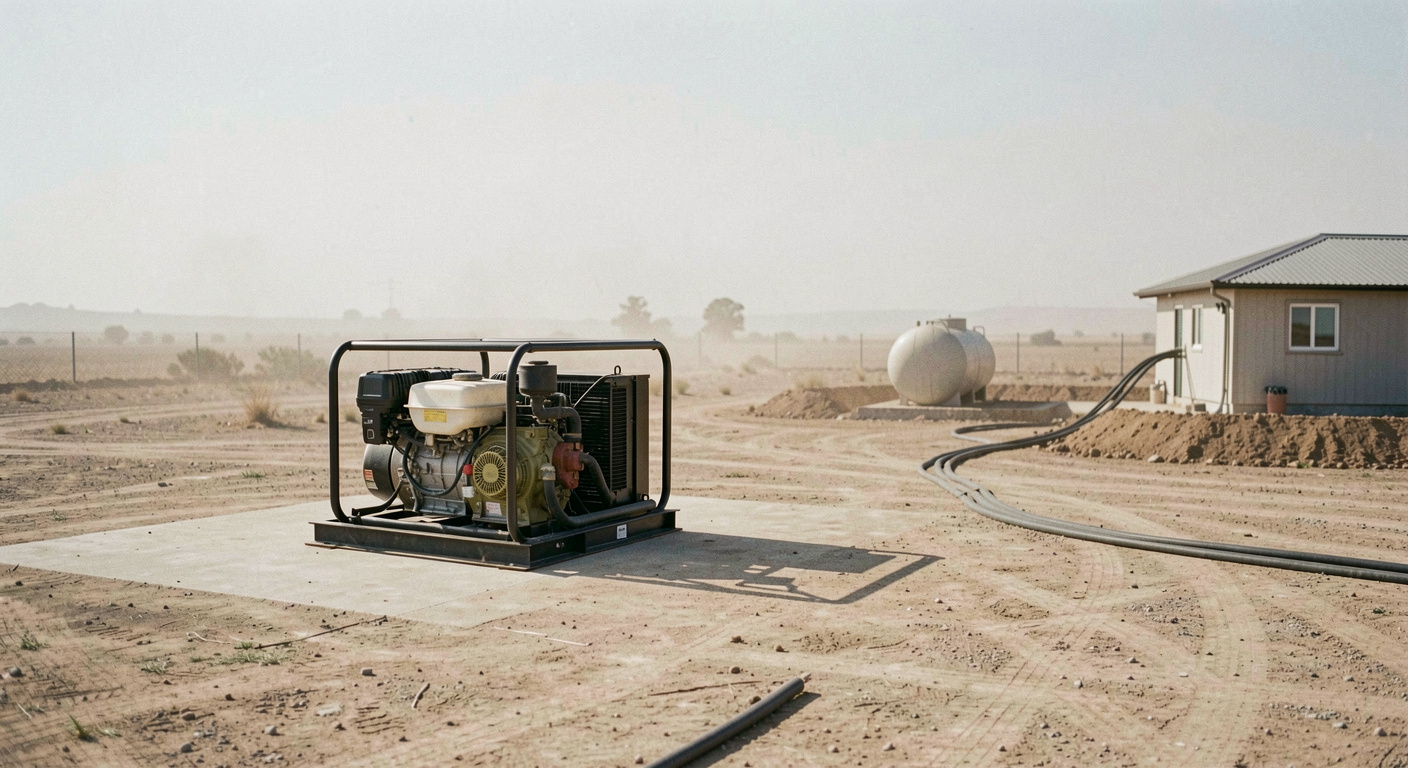
An export project starts from different facts: a grid that fails weekly, an ambient of 45 degrees, a parts counter two days away, and a sea container between the factory and the site.
None of that changes the physics. All of it changes the specification, and it changes it before the equipment list is written. The domestic profiles sit in the case studies section.
An export project starts from a different set of facts. The grid may fail weekly rather than yearly, which turns a standby machine into a prime one. The ambient may be 45 degrees Celsius in the shade, which takes a slice off the rating before anything is loaded. The nearest parts counter may be a two-day drive away. And the equipment has to survive a sea container, a port, and a road that was not designed for a 12 tonne skid.
None of those change the physics. All of them change the specification, and they change it before the equipment list is written rather than after.
Climate: the rating is corrected before it is used
Ratings are published at a reference condition, normally 25 degrees Celsius at sea level. A site at 42 degrees and 1,400 metres is not a small adjustment: the usual planning figures, roughly 1 per cent of output lost per 100 metres above 1,000 metres and about 2 per cent per 5 degrees above 40 degrees, compound into a double-digit percentage. A set that would comfortably carry the load in a European basement can be marginal on the same load in the Sahel.
Humidity and dust add their own corrections in practice rather than on paper. A dusty site loads air filters and radiator cores far faster than the service schedule assumes, and the first symptom is not a fault code, it is lost output on the hottest afternoon of the year. The correction arithmetic itself is set out in the sizing method.
| Factor | Typical effect | Where it is settled |
|---|---|---|
| Altitude above 1,000 m | About 1 % output per 100 m | At specification, before ordering |
| Ambient above 40 degrees C | About 2 % output per 5 degrees | At specification |
| Dust load | Filter and radiator service interval | In the maintenance contract |
| Grid reliability | Standby duty becomes prime duty | In the duty class on the order |
| Parts distance | Spares holding on site | In the commissioning package |
Grid reliability turns standby into prime
This is the most expensive misunderstanding in export projects. A set bought on its standby rating, which allows a limited number of hours per year on a variable load, and then run 1,500 hours a year because the utility fails daily, is being operated outside the class it was sold under. The consequences arrive as warranty arguments and as premature overhauls.
The fix is trivial and costs nothing at the right moment: write the expected annual hours and the expected load profile into the enquiry, and buy the rating that matches. The duty classes are explained in the generator set section, and the platform pages most often specified for this kind of work, Yuchai among them, are written with that duty in mind.
How many hours a year will the machine actually run, and how far is the nearest stocked parts counter? The first decides the duty class and therefore the size. The second decides the spares list and the service contract. Neither is a technical question, and both change the equipment.
Shipping and installation constraints
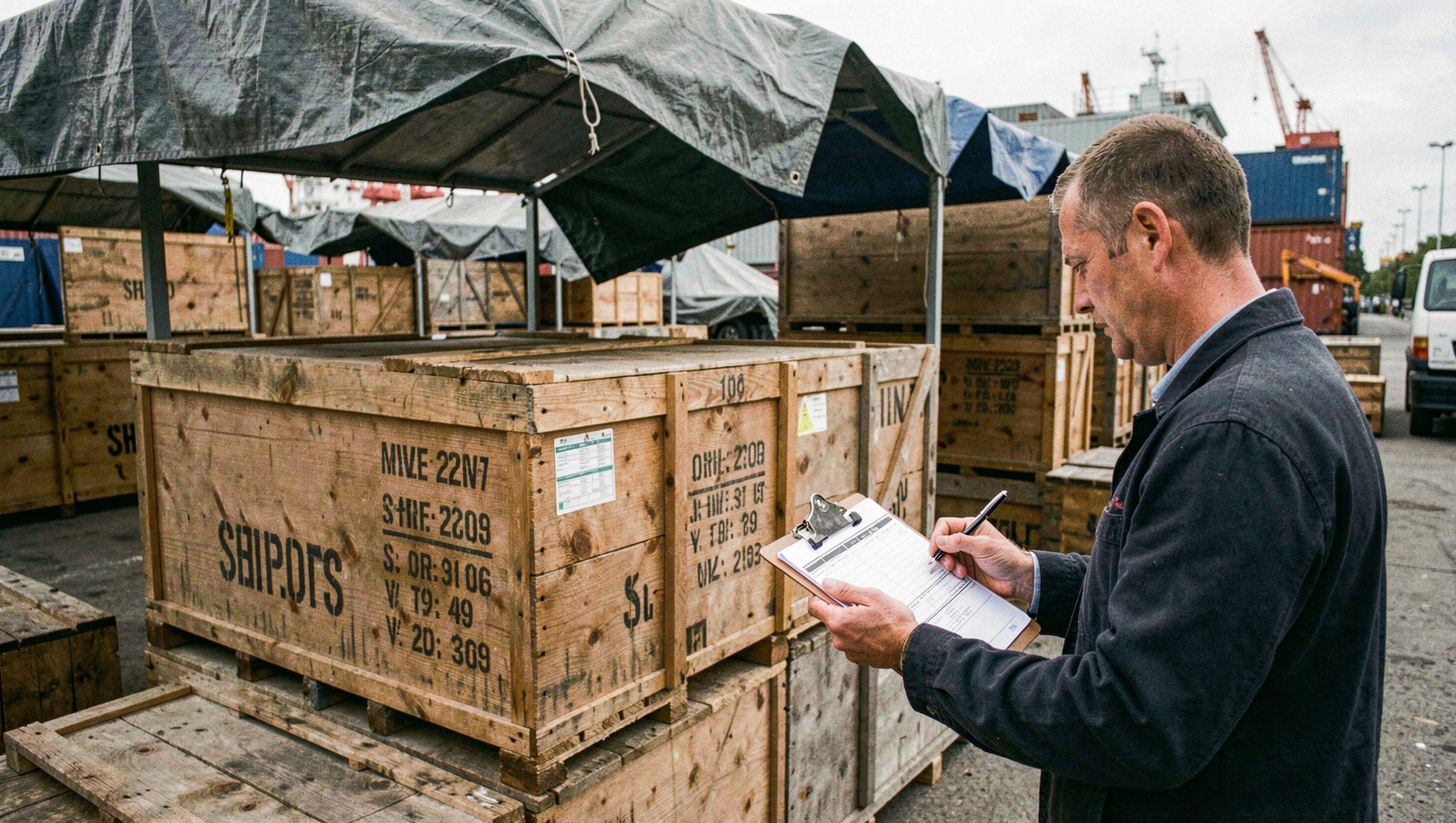
A container-mounted set solves several problems at once: it arrives weatherproof, it needs no building, and it can be lifted by equipment that a port already has. It also creates its own constraints. Ventilation openings sized for a container are smaller than a plant room's, so hot climate derating tightens. Internal service access is limited, which changes how a major service is planned. And the container floor becomes the acoustic and vibration interface, which matters where the set sits close to occupied buildings.
For process air equipment the shipping question is dimensional rather than environmental. A large fan rotor that cannot be split for transport dictates the whole logistics chain, and sometimes dictates the machine selection. That is one of the constraints running through the sintering machine loop cooling blower profile, which is the worked example of this section.
Commissioning far from support
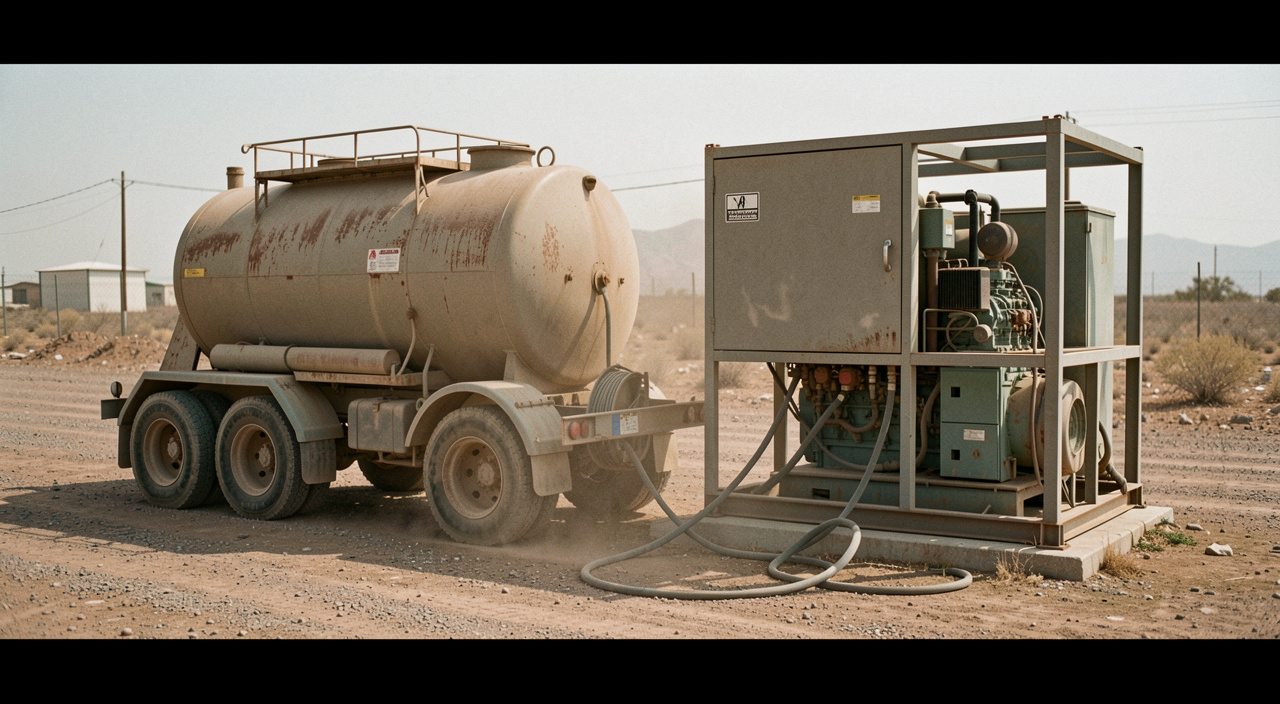
The last constraint is human. On a site with no local dealer, the commissioning engineer may be the last qualified person to touch the machine for a year. That makes three things worth insisting on: a written commissioning report with the load test results, a set of photographs of both data plates, and a handover session recorded in the local operating language. The break-in requirement for a new engine also has to be respected under this pressure, and it is the first thing sacrificed when a site is waiting for power, which is why the running-in guide is worth reading before the machine arrives rather than after.
Read next
Two more profiles follow supply and season: keeping the lights on in rural Spain and seasonal buildings and their standby sets.
The worked example of this section is the sintering machine loop cooling blower profile, a retrofit brief with a fixed envelope, a noise limit and a short shutdown window.
For the domestic equivalent of these profiles, organised the same way, see the case studies hub.
For market context on where export demand is coming from, the international news section tracks the specification trends, and the English datasheet page covers the documents these projects run on.