Genset Digest / Diesel Generator Sets / Volvo Penta
Volvo Penta Generator Sets
Four inline platforms cover the whole Volvo Penta generating range, from 4.8 litres at 100 kVA to 16.1 litres at 700 kVA. There are no V blocks, which caps the range and concentrates the engineering. This page maps the TAD and TWD families to their output bands and to the standby duty they are usually bought for.
Volvo Penta builds generating engines on a narrower base than most of its competitors, and that narrowness is the whole story of the brand in this market. There are no V-block genset engines in the range. Everything is built on inline four, five and six cylinder blocks derived from the truck and industrial engine families, which caps the genset range at roughly 700 kVA and concentrates the engineering effort on a small number of platforms.
The naming is systematic once decoded. T is turbocharged, A is charge air cooled through an air-to-air cooler, W is charge air cooled through a water circuit, D is diesel, and the GE suffix marks the generating engine version with its fixed-speed governing. A TAD1642GE is therefore a turbocharged, air-to-air aftercooled 16 litre generating engine, and a TWD1643GE is the same displacement with water-cooled charge air.
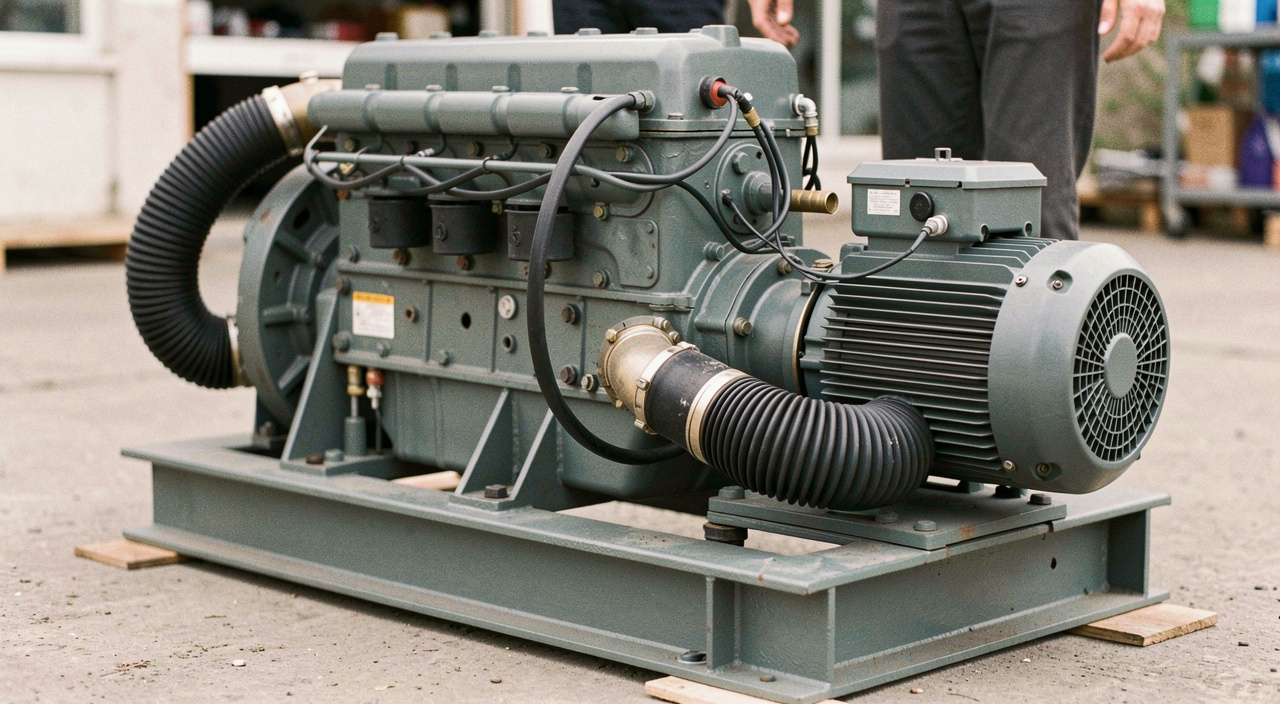
The four platforms in the generating range
The 4.8 litre TAD530 to TAD533 family sits at the bottom, covering roughly 100 to 160 kVA. The 7.1 litre TAD720 to TAD734 family follows at about 175 to 290 kVA. The 12.8 litre TAD1341 to TAD1345 family covers roughly 340 to 500 kVA, and the 16.1 litre TAD1641, TAD1642 and TWD1643 family reaches about 500 to 700 kVA.
Four platforms across 100 to 700 kVA means each block covers a wide output spread, achieved by fuelling and turbocharger changes rather than by displacement changes. For a fleet operator this is a real advantage: a site running a 350 kVA and a 500 kVA set can be holding one set of filters, one coolant specification and one service procedure for both.
| Family | Displacement | Cylinders | Typical genset output at 50 Hz |
|---|---|---|---|
| TAD530GE to TAD533GE | 4.8 L | 4 in line | 100 to 160 kVA |
| TAD720GE to TAD734GE | 7.1 L | 6 in line | 175 to 290 kVA |
| TAD1341GE to TAD1345GE | 12.8 L | 6 in line | 340 to 500 kVA |
| TAD1641GE, TAD1642GE | 16.1 L | 6 in line | 500 to 650 kVA |
| TWD1643GE | 16.1 L | 6 in line | 620 to 700 kVA |
Why these engines are specified for standby duty
Standby duty asks a specific question of an engine: can it take a large load step within seconds of a cold, or at best warm, start, and hold voltage and frequency inside the limits the installation was designed to? On the larger Volvo platforms that question is answered by electronic engine management with a fast-acting governor, which recovers frequency after a step more crisply than a mechanical governor can.
That is why these engines appear so often behind transfer switches in commercial buildings, water works and telecom exchanges. It is also why the specification conversation should be about the load sequence rather than the badge: a set that comfortably handles a 60 per cent first step on one site may be marginal on another with a large direct-on-line motor. Translating a real load list into the required output, with the starting margin included, is the whole subject of the sizing guide.
Frequency and voltage recovery after a load step depend on the engine governor, the alternator reactance, the size of the step and the order of the steps. Two identical sets on two sites can behave differently because one starts its largest motor first and the other starts it last. The performance classes of ISO 8528 describe the limits; the load sequence decides whether they are met.
Cooling, and what the range does not cover
All four platforms are supplied either as radiator-cooled packages or as heat-exchanger versions for installations where the radiator cannot be fitted. The heat exchanger route appears in basements and in ships, and it moves the risk from air flow to water flow: a fouled plate exchanger produces the same high coolant temperature as a blocked radiator core, with no visible dust to warn you. Overheating on a set that has always run cool has a short list of causes, and it is worked through in the guide to overheating and load imbalance.
What the range does not cover is the megawatt band. A site needing 1,500 kVA from one machine is looking at a different platform, and the honest comparison there is with the large V-blocks described in the Perkins platform page and its 4000 series. Where redundancy is wanted anyway, two 700 kVA sets in parallel are frequently the better answer than one 1,400 kVA machine, an argument developed in the case studies section.
Service intervals and the paperwork
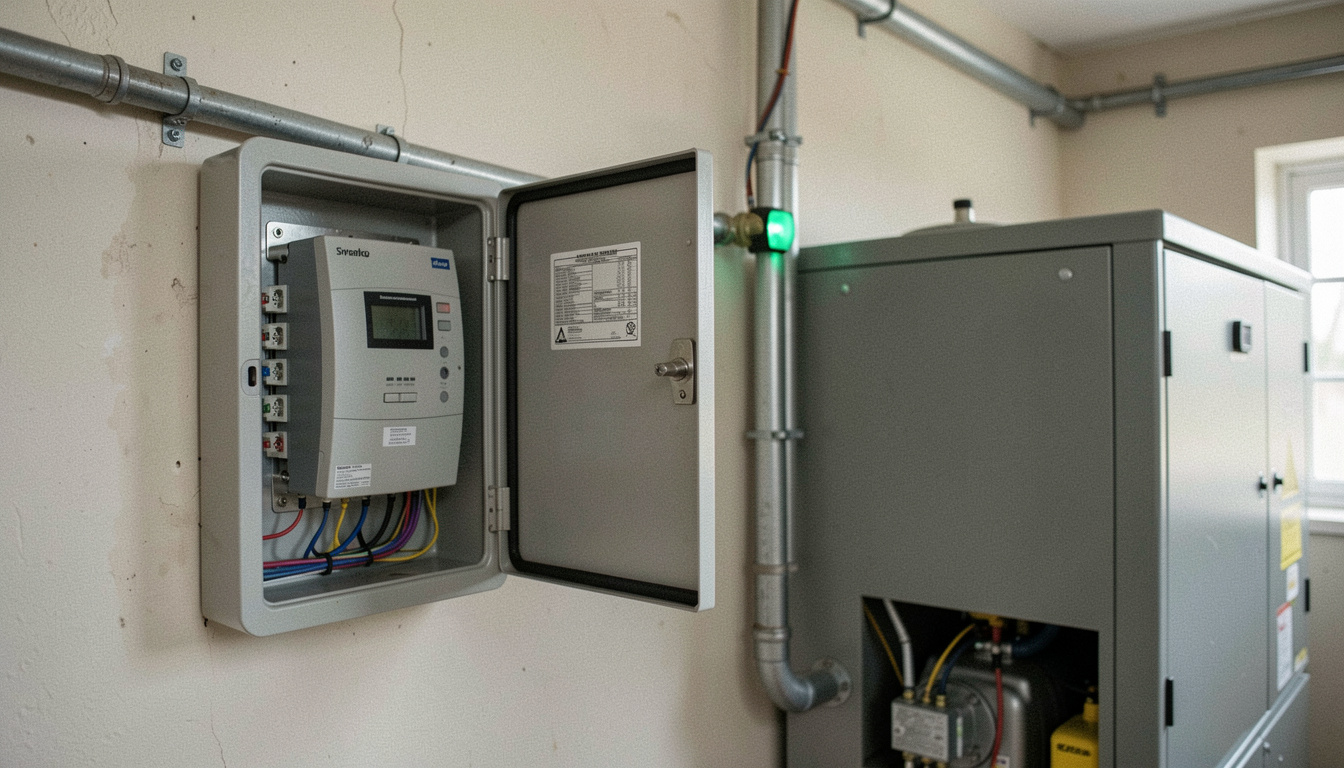
Published intervals for the generating versions of these engines follow the usual pattern: oil and filter service on an hours or calendar basis, whichever comes first, a longer interval for coolant renewal, and periodic valve clearance and injector checks tied to the engine family. On a standby machine the calendar limit almost always arrives before the hour limit, which surprises operators who plan maintenance around a running-hours counter.
At handover, the engine data plate and the genset rating plate should both be recorded, along with the commissioning report and the load test results. What that documentation set should contain, and why it is worth insisting on before payment rather than after, is set out in the generator set section index and in the standards pages that follow it.
Read next
For the platform that starts where this one stops, in displacement and in output, the Perkins page maps the 400 to 4016 range.
Before choosing between one large set and two paralleled ones, the sizing method works through the running load, the starting margin and the derating corrections.
A standby machine that has never run hard has never proved its cooling. That test, and the deposit problem it prevents, is covered in the load bank guide.