Genset Digest / Diesel Generator Sets / Perkins
Perkins Generator Sets
Perkins covers an unusually wide range for one platform, from a 9 kVA telecom unit on a 1.5 litre three-cylinder block to a 2,500 kVA V16. This page maps the engine series to the output bands they support, and to the service points that decide what the set costs to keep.
Perkins occupies a particular place in the generating set market: the model range is unusually wide at the bottom end, and unusually well documented. A specifier can find a Perkins-powered set at 9 kVA for a telecom cabinet and another at 2,500 kVA for a data centre, both with published fuel consumption curves at 25, 50, 75 and 100 per cent load. Perkins has been part of Caterpillar since 1998, which is why parts and service coverage tends to follow the Caterpillar dealer map rather than a separate one.
As with any platform, the useful unit of comparison is the engine series, not the badge on the enclosure. Six families cover essentially the whole genset range.
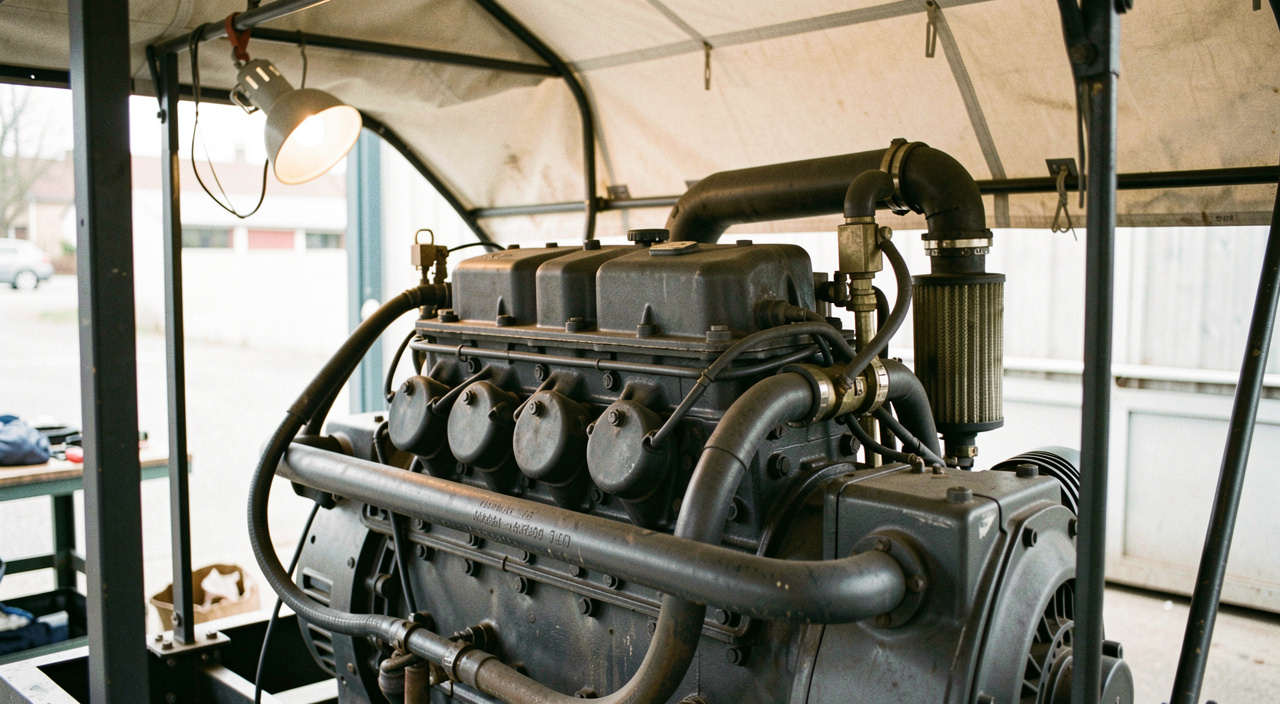
The small end: 400, 403 and 404 series
The 400 series covers roughly 8 to 20 kVA on two, three and four cylinder blocks between 0.5 and 2.2 litres. These are naturally aspirated, mechanically governed engines built for a life of short runs. The failure mode that dominates this size class is not wear, it is neglect: a set that runs 30 minutes a month for six years accumulates almost no hours and still needs its oil changed on the calendar. Why the calendar limit exists at all is explained in the oil change interval guide.
The core: 1103, 1104 and 1106 series
This is where most Perkins-powered sets live. The 3.3 litre 1103A-33G covers about 20 to 35 kVA. The 4.4 litre 1104 family, in naturally aspirated, turbocharged and turbocharged-aftercooled forms, covers roughly 40 to 110 kVA. The 7.0 litre six-cylinder 1106A-70TAG reaches about 130 to 200 kVA.
These engines are the direct competitors of the small and mid Cummins blocks, and the comparison between the two families is usually decided by the local parts network rather than by the specification, a point developed in the Cummins platform page. Both are mechanically robust; neither forgives a set that is never run under real load.
| Series | Displacement | Configuration | Typical genset output at 50 Hz |
|---|---|---|---|
| 403A-15G | 1.5 L | 3 in line | 9 to 13 kVA |
| 1103A-33G | 3.3 L | 3 in line | 20 to 35 kVA |
| 1104A-44TG | 4.4 L | 4 in line | 50 to 100 kVA |
| 1106A-70TAG | 7.0 L | 6 in line | 130 to 200 kVA |
| 1506A-E88TAG | 8.8 L | 6 in line | 220 to 275 kVA |
| 2206A-E13TAG | 12.5 L | 6 in line | 330 to 450 kVA |
| 2506A-E15TAG | 15.2 L | 6 in line | 450 to 550 kVA |
| 2806A-E18TAG | 18.1 L | 6 in line | 600 to 800 kVA |
| 4008-30TAG | 30.0 L | V8 | 900 to 1,100 kVA |
| 4016-61TRG | 61.1 L | V16 | 2,000 to 2,500 kVA |
The 1500, 2000 and 2800 series, from 220 to 800 kVA
The 8.8 litre 1506, the 12.5 litre 2206, the 15.2 litre 2506 and the 18.1 litre 2806 form a well-spaced ladder from roughly 220 to 800 kVA on inline six-cylinder blocks. The E suffix on these designations marks electronic fuel control, which brings the same trade-off described for the electronic Cummins engines: better load acceptance and readable fault codes, in exchange for a much lower tolerance of dirty or wet fuel.
The 2806 in particular is a common choice for hospital and data room standby in the 600 to 750 kVA band, because it holds frequency well on a large first step. Whether that matters on a given site depends entirely on the load sequence, which is why the step load question belongs in the sizing method rather than in a brochure comparison.
The 4000 series: V8, V12 and V16
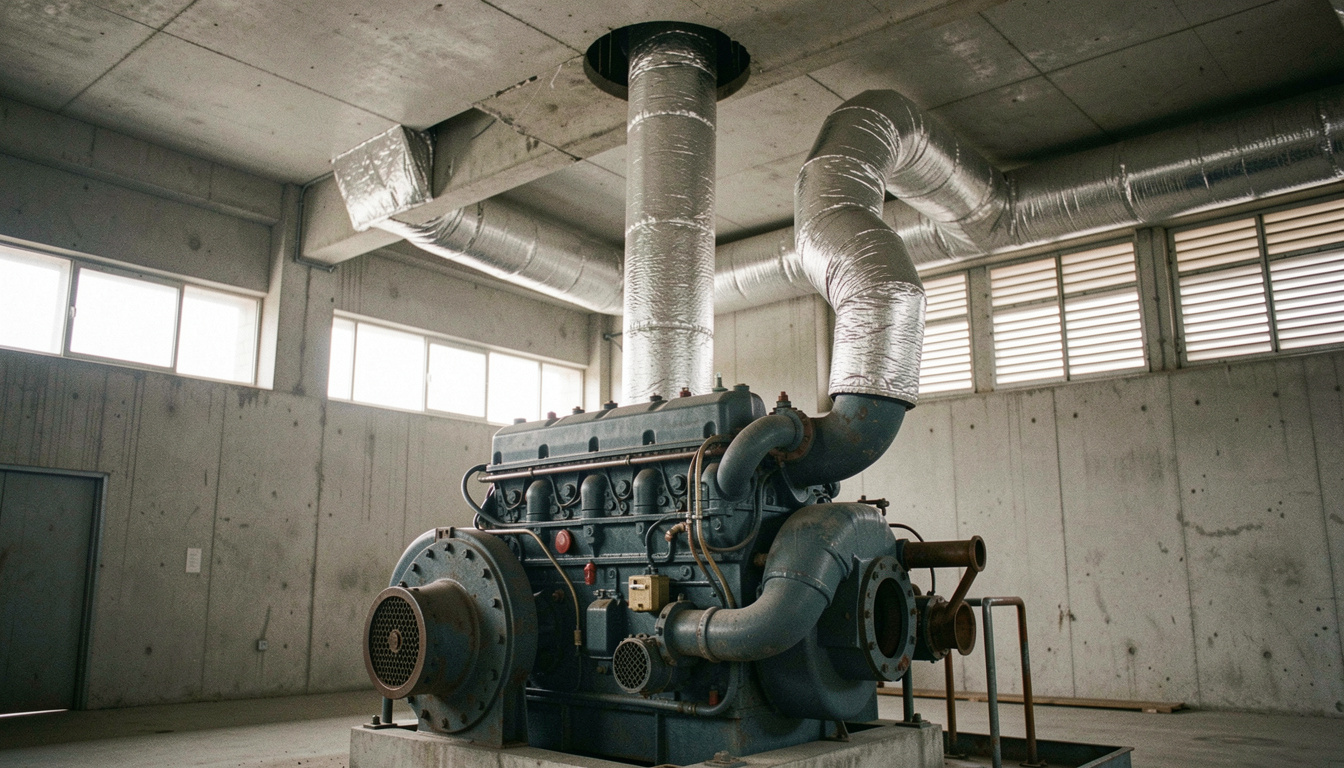
Above 800 kVA the range moves to the 4000 series, a 30 to 61 litre V-block family covering roughly 900 to 2,500 kVA in genset form. These are large, heavy machines that change the installation problem as much as the electrical one: foundation loading, exhaust routing, combustion air volume and radiator discharge all become building questions. A 2,000 kVA set needs combustion and cooling air measured in tens of cubic metres per second, and a plant room that cannot supply it will derate the machine no matter what the plate says.
Whatever the platform, a new or overhauled engine needs a running-in period before it is asked for continuous full load, and a standby machine needs a load test before anyone relies on it. The first is covered in the break-in guide, the second in the load bank testing guide.
Service points that recur
Three items dominate Perkins service reports across the range. Air filter restriction, because these engines are often installed in dusty enclosures and the restriction indicator is rarely looked at. Coolant condition, since the aftercooled engines depend on the jacket water circuit staying within specification. And fuel, always fuel: water separators that are never drained, and tanks that were filled once at commissioning. That last problem is the subject of the guide to fuel tank corrosion, seals and contamination.
What to read on the plate
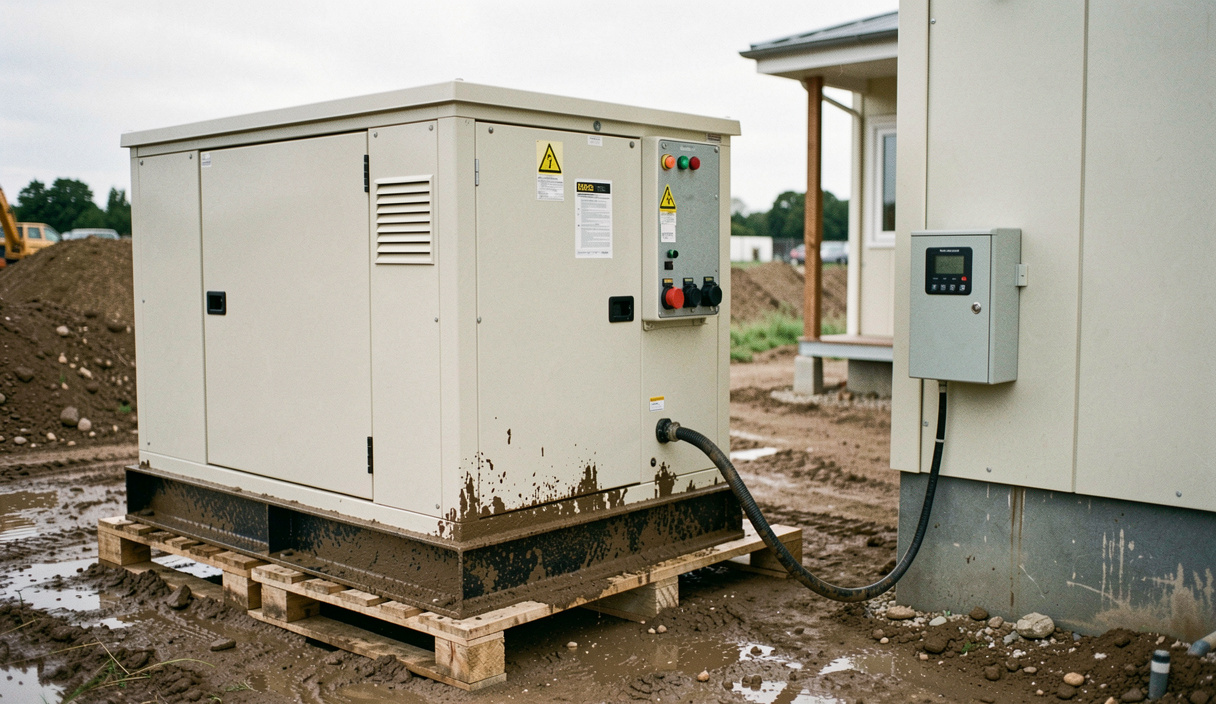
A Perkins engine number is a structured code that identifies the build, and it is the reference a parts desk will ask for. It sits on a plate on the block, separate from the genset rating plate. Both should be recorded at handover along with the commissioning report, for the reasons set out in the certification and standards page. If the supplier is an assembler rather than the engine maker, and most are, the explainer on OEM, assembler and distributor roles sets out who is responsible for what.
Read next
Working around these engines means ropework and posture too: site ropework and the manual handling guide.
For a directly comparable platform in the standby role, the Volvo Penta page covers the TAD and TWD families up to about 700 kVA.
A new Perkins-powered set should not be put straight onto continuous full load: the running-in guide explains what the first 60 hours are for.
For the whole picture of duty classes and derating, return to the generator set section, or take the sizing route through load list to kVA.
The small end of the range aboard a working boat is described in a small auxiliary set at sea.