Genset Digest / Industry News / Hydrogen, fuel cells and the diesel set
Hydrogen, fuel cells and the diesel set: what the alternative actually changes
Hydrogen does not replace the diesel set so much as redraw its boundary: a fuel cell covers some standby and prime duties cleanly, but it brings a fuel that has to be made, stored and handled on a completely different discipline. The plant questions, rating, fuel security, siting and records, are the same questions with new answers.
The hydrogen conversation reaches the generator room through two doors: fuel cells that turn hydrogen into electricity directly, and engines that can burn hydrogen or hydrogen blends. Both are real, both are bounded, and both change the site more than they change the duty. A clear map of the territory is hydrogen system basics, an explainer covering green hydrogen production and electrolyser efficiency, fuel-cell duty cycles for vehicles and stationary backup, pipeline blending, and the safety, storage and offtake questions an industrial project has to answer.
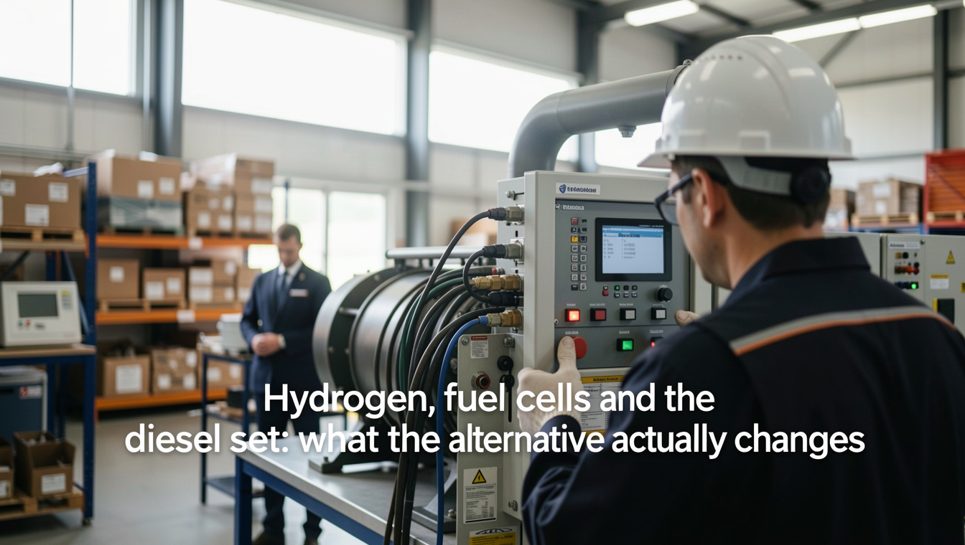
Where does a fuel cell genuinely compete?
Where the duty is short, quiet and clean. A stationary fuel cell is strong on standby-like duties where runtimes are modest, emissions at point of use are constrained, and noise limits are tight, because it has no combustion and few moving parts. It is weaker where the duty is long and the fuel must be stored in quantity, because hydrogen's storage, compressed or liquefied, is bulkier and more demanding per unit of energy than a diesel tank. The diesel set's advantage has never been elegance; it is that its fuel is a liquid that stores for the duty the site actually faces.
What does the fuel supply ask of the site?
Everything the diesel tank asks, and more. Hydrogen arrives as a supply question: delivered cylinders or a bulk store, or an on-site electrolyser with its own power demand, water supply and maintenance routine. Safety is different in kind rather than in degree: hydrogen's ventilation, detection and venting requirements replace the bund and the fire valve. The siting arithmetic this produces is the same discipline as the industrial estate siting question, rewritten for a lighter, faster-leaking fuel.
Ask first how many hours the plant must run without resupply. That single figure does most of the choosing between a diesel tank and a hydrogen store.
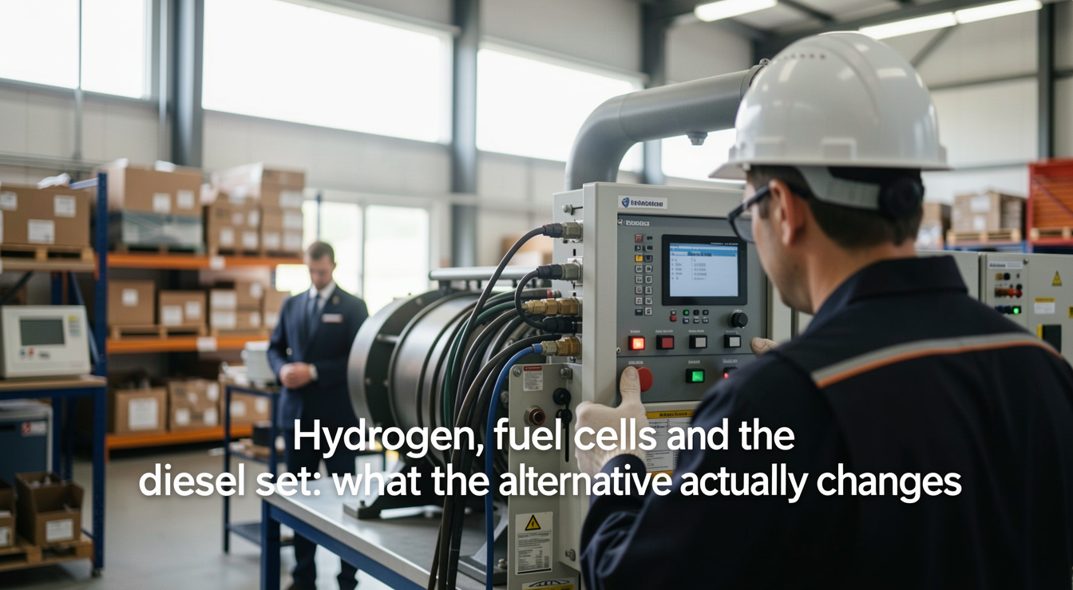
What stays exactly the same
The specification method. Whether the machine burns diesel or converts hydrogen, the site still sizes it by the load list and the step acceptance in the sizing worksheet, still rates it by hours of expected duty as the duty classes describe, still tests it on a schedule and still keeps the file that proves it. The fuel is new. The discipline is the one this magazine has always covered, and the organisations that certify it, on the diesel side, the routine of the standards and documents page, are already writing the hydrogen versions.
The honest outlook
Watch the duties where the crossover is closest: short standby windows, urban sites with strict air rules, microgrids already carrying renewables whose surplus can feed an electrolyser. For a long-outage rural site the diesel tank remains the practical answer for years. The transition will be measured duty by duty, not declared all at once, which is the way plant decisions have always actually been made.
The diesel side is not standing still
While hydrogen finds its duties, the diesel set is quietly moving too: hydrotreated vegetable oil as a drop-in fuel where the engine maker approves it, tighter emissions packages, better controllers and more honest telematics. The realistic near-term picture for most sites is not a fuel switch but a fuel strategy, a set that can run cleaner diesel-family fuels while the hydrogen infrastructure it might one day use gets built around it.
For a buyer today the practical question is optionality. A plant room designed with the ventilation, detection space and electrical margin that a future conversion would need is cheap insurance; one built tight to today's minimums is a bet that the fuel will never change. The sites that will convert smoothly are the ones that left room for it on the drawing.
The microgrid is where the two genuinely meet. A site with solar, storage and a backup machine is already an energy system, and in that system the diesel set and the fuel cell stop being rivals and become interchangeable answers to the same question: what covers the gap the renewables leave. The operator's skill shifts accordingly, from running a generator to orchestrating sources, and the sites already learning that orchestration will find a fuel switch easier than those still thinking in single machines.
Policy will keep pushing the question. Emissions rules at point of use, corporate carbon accounting, and public procurement that asks for low-carbon backup all move the calculation before the technology does. The diesel set is not finished, but its monopoly on resilience is, and the plant engineer's posture is the same one this magazine has always recommended: know the duty, know the options, and let the written requirement rather than the fashion do the choosing.
For now the working answer on most sites is boring and correct: a well-kept diesel set, an honest duty rating, and a design that has left room for whatever fuel the next decade brings. Hydrogen will arrive duty by duty, and the plants that meet it prepared are the ones that already run their present machine like it mattered.
The magazine's position is the one it takes on every new energy story: the fuel is a detail, the duty is the question, and the installation that knows its duty will choose its fuel correctly, whichever way the decade decides.
None of which makes the diesel set a museum piece. Its virtues are stubborn ones: fuel that stores, service networks that exist, duty ratings that are understood. The transition, when it comes to a given site, will be an engineering decision, and engineering decisions are what this publication exists to serve.
Sources
U.S. Department of Energy, fuel cells
Read next
The house-scale version of the fuel question is in standby power for a rural house.
For the diesel baseline this comparison stands on, see the generator set section and the maintenance index.
What the fuel adds to a site's emissions account is worked through in the carbon figure behind the fuel.