Genset Digest / Maintenance & Operation Guides / Standby power for a rural house
Standby power for a rural house: what a small set actually covers
A rural house that loses the mains loses heat, water and refrigeration at once, because the well pump, the boiler controls and the freezer all sit on the same dead board. A small standby set covers that list if it is sized to the real starting currents, connected through a proper transfer device, and fed fuel that has been stored with the same care as the machine itself.
The first decision on a rural installation is not the size of the set, it is the list of loads. A house with a private well cannot treat water as optional, and a house heated by oil or gas still needs electricity for the burner, the circulator and the controls. The honest starting point is a sheet of paper: pump, heating controls, refrigeration, a few lighting circuits, one socket circuit for chargers and a router, and anything medical. That list, not the headline kilowatts on a brochure, decides what the set must start and carry. Owners who want a wider picture of what winter actually asks of an old house can compare their list against storm preparation for an older house, a New England notebook on cold-climate upkeep, nor'easter readiness and the seasonal rhythm of a rural property.
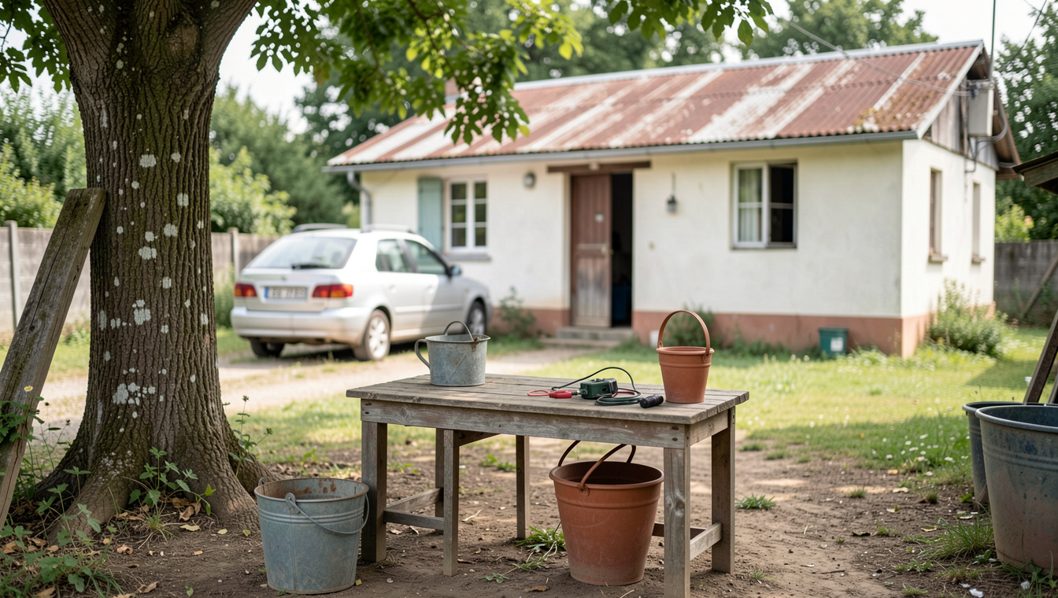
What does the set actually have to start?
Starting current is the figure that surprises people. A well pump or a freezer compressor draws several times its running current for a second or two, and a set that comfortably carries the running load can still stall or dip hard enough to drop everything when two motors start together. The sizing method described in the sizing worksheet exists precisely because of this: running watts are added, the largest motor's starting demand is checked against the set's step load acceptance, and only then is a rating chosen. A set chosen on running watts alone is the classic rural mistake.
Two motor starts are the usual test. If the well pump and the heating circulator can coincide, the set must accept both steps. Where the pump is large relative to the set, a deliberate sequence helps: the transfer arrangement can put the pump on a priority circuit so it is not competing with everything else at the moment of transfer.
How the transfer is arranged
A transfer switch is not a convenience, it is the device that keeps generator power and utility power from ever meeting. On a house it is either manual, with the owner throwing a switch after the set is running and warm, or automatic, where the switch senses the outage, starts the set and transfers when voltage stabilises. Automatic transfer suits a house that is sometimes empty; manual transfer suits a house where someone is always home and prefers to decide. Either way, the circuits fed by the set are a defined subset, and the rest of the board stays dead until the mains return.
The position of the set follows the exhaust, not the other way round. A small diesel on a pad beside the house needs its exhaust routed away from windows and air inlets, its cooling air unobstructed, and enough working room that a service engineer can actually stand at the filters. These are the same questions the building profiles in the installation section raise at a larger scale.
A motor that runs at 1 kW can demand 4 to 6 kVA for the first second. The set's step load acceptance, not its continuous rating, is what decides whether the lights dip or hold when the pump starts.
The same logic applies to the maintenance side of a rural installation. A standby set is a small engine, but its fuel system, filters and starting battery follow the rules of any diesel plant, and the people who service them often come from an aviation maintenance background. The aviation maintenance technician path, the A&P certificate and the ground service chain are documented in the Hangar Ledger field guide, which covers how US certification works for the trades that keep engines running. That vocabulary helps when a technician explains why a set failed to start after six idle months.
Fuel on a property, not in a plant room
A rural set usually runs a few dozen hours a year, which means the same fuel sits in the tank for months. Diesel degrades in storage: water condenses, sediment settles, and in warm conditions microbial growth turns the bottom of the tank into sludge that the first real outage will pull into the filters. The habits that keep a plant tank clean, rotation, water draining, and periodic testing, are set out in the fuel tank guide, and they apply unchanged to a domestic tank of two hundred litres. A house already served by a gas main or a propane tank can avoid the ageing fuel altogether with a set running on natural gas or propane, provided the load list is checked against the lower rating such a machine carries on natural gas.
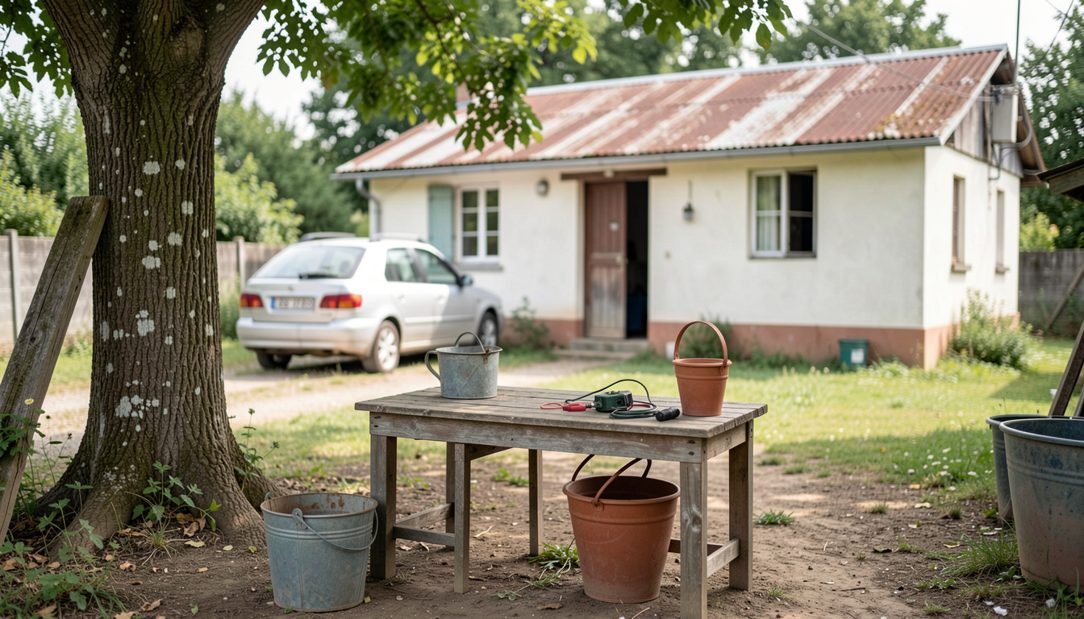
What the first real outage teaches
The first long outage is the acceptance test nobody scheduled. It reveals which circuits were missed, whether the fridge and the pump can run together, whether the set's exhaust drifts toward a bedroom window, and whether the owner remembers the start sequence at midnight in the rain. The remedy is the same one used on industrial standby plant: a written sequence kept with the set, a monthly exercise under whatever load is available, and once a year a run that actually works the machine rather than merely starting it, the reasoning behind the load bank guide.
Rating choice is the last quiet decision. A house that only ever needs a few hours at a time can live with a set rated for standby duty; a property that regularly loses the grid for days after storms is asking for prime-rated behaviour, and the difference between the two classes is explained in the duty ratings discussion. The rating on the plate is a promise about hours, and a rural house that tests that promise every winter should buy accordingly.
Keeping the set honest between outages
The calendar does most of the maintenance on a house set. A short exercise every month keeps the battery proven and the oil circulated; a longer run once a season works the engine properly; and the annual service is timed for before the storm season rather than after it. The exercise is logged with its date, its duration and the load it carried, because a rural set's entire résumé is that log: when the house is sold or the insurer asks, the record answers.
The last habit is the walk-around. Once a month the owner looks at the pad, the exhaust direction, the fuel gauge and the state of the enclosure the same way the plant inspector looks at a plant room. Small things, a bird nest in the intake grille, a fuel cap left loose, a snowdrift against the louver, are the findings the walk exists to catch. The machine that is seen regularly is the machine that starts.
The review that closes the loop is annual and short. After the first storm season the owner walks the list again: which circuits were missed, which were unnecessary, whether the fuel lasted as long as the arithmetic promised. The set's own record of running hours tells the same story, and the two together are what a winter actually teaches. A house that has been through one season with a set is a different owner from the one who bought it.
Nothing on the rural installation is exotic, and that is the point. The loads are small, the stakes are domestic, and the discipline is the same one an industrial site runs: a written list, a proven transfer, stored fuel treated as a consumable, and a machine that is exercised rather than merely owned. The set that is treated like plant behaves like plant; the one treated like garden furniture behaves accordingly, on the one night it is needed.
One habit ties the whole installation together: the annual walk-through with the set's file in hand. Plate against the file, fuel against the log, the pad and the enclosure against last year's photographs. The rural house set earns its keep slowly and quietly, and the owner who reads it once a year keeps it honest.
Sources
Read next
The paperwork that a set accumulates starts earlier than most owners think: tags, log sheets and the printed record follows the paper trail a plant room still needs.
For the numbers behind the choice, the sizing worksheet turns a load list into a rating, and the maintenance section index covers what the set asks for once it is installed.
Away from a building, the same questions are covered in auxiliary power on a working boat.