Genset Digest / Diesel Generator Sets / Weichai
Weichai Generator Sets
The WP series covers roughly 20 to 400 kVA in generating form, with heavier blocks continuing above it. This page maps the series to their output bands, sets out where the price difference against an imported platform actually comes from, and names the three maintenance habits that decide whether a set of this class reaches ten years.
Weichai Power, based in Weifang in Shandong province, is one of the two engine makers whose blocks sit under most Chinese-built generating sets, the other being Yuchai. Its WP series covers roughly 20 to 400 kVA in generating form, and through the acquisition of Moteurs Baudouin in 2009 the group also reaches well into the megawatt band with the M series blocks sold under the Baudouin name.
For a buyer, the interesting question is not whether these engines work, they do, in very large numbers, but where the cost difference against an imported platform actually comes from, and what it costs back over ten years.
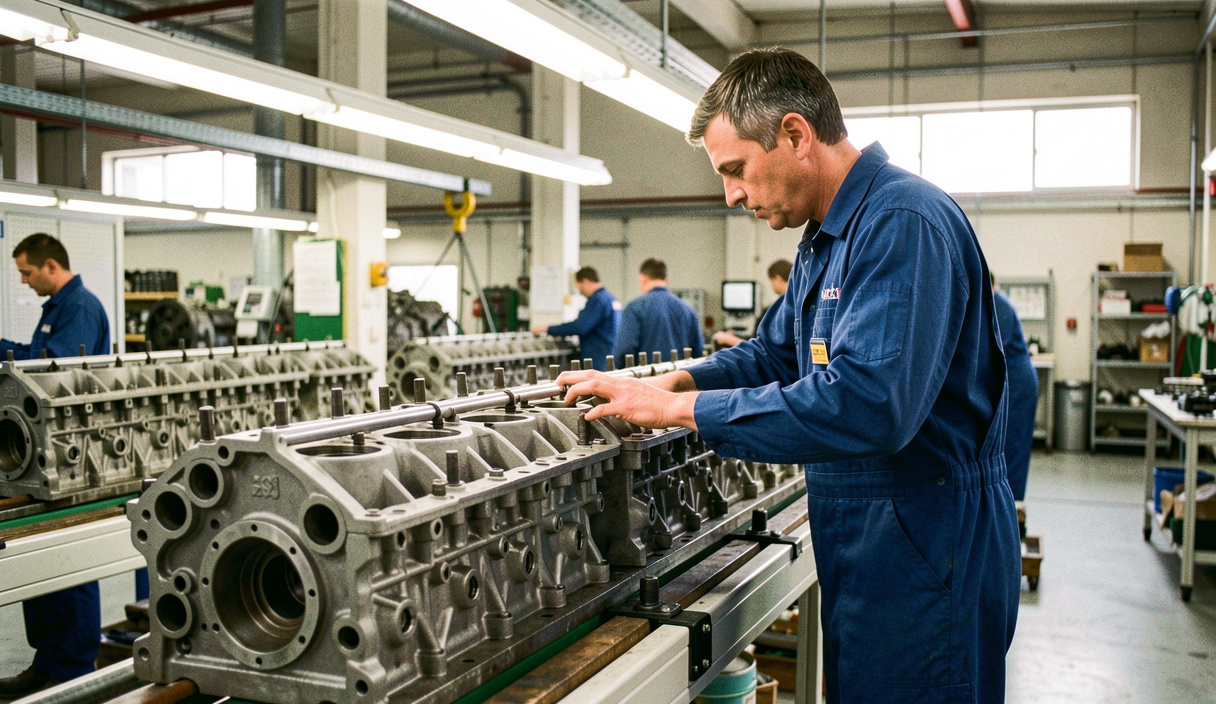
The WP series, from 2.3 to 13 litres
The naming is straightforward: WP followed by the displacement in litres. WP2.3 and WP3.9 cover the small end at roughly 20 to 50 kVA. WP4 and WP6 cover about 50 to 140 kVA and are the volume products of the range. WP10 reaches roughly 150 to 220 kVA, WP12 about 250 to 330 kVA, and WP13 about 300 to 400 kVA. Above that the older 6170 and 8170 heavy blocks cover roughly 450 to 900 kVA, and the Baudouin M series continues upward.
| Series | Displacement | Cylinders | Typical genset output at 50 Hz |
|---|---|---|---|
| WP2.3 | 2.3 L | 4 in line | 20 to 30 kVA |
| WP4 | 4.5 L | 4 in line | 50 to 90 kVA |
| WP6 | 6.7 L | 6 in line | 90 to 140 kVA |
| WP10 | 9.7 L | 6 in line | 150 to 220 kVA |
| WP12 | 11.6 L | 6 in line | 250 to 330 kVA |
| WP13 | 12.5 L | 6 in line | 300 to 400 kVA |
| 6170 and 8170 | 24 to 32 L | 6 and 8 in line | 450 to 900 kVA |
Where the cost difference comes from
Three things separate the price of a WP-powered set from an imported equivalent of the same output: manufacturing volume in a lower-cost base, a simpler mechanical fuel system on many models, and a shorter supply chain to the assemblers who build the sets. None of those are quality defects. What they do change is the tolerance band the engine was designed to, and therefore the sensitivity of the machine to how it is treated.
The practical consequence is that the maintenance schedule is not optional in the way an operator might get away with on a lightly used imported set. Oil and filter service at the published interval, air filter restriction watched in dusty installations, and coolant changed rather than topped up, are the three habits that decide whether a set of this class reaches ten years cleanly. The interval logic, including the case for a higher oil grade, is set out in the oil change interval guide.
The strongest argument for or against any engine platform on a given site is the distance to the nearest stocked filter, injector and liner set. An engine with a dealer 40 kilometres away is a better engine, in practice, than one with a dealer 900 kilometres away, whatever the two data sheets say.
Cooling, turbocharging and the fuel system
Most WP models above 50 kVA are turbocharged, and the larger ones are charge air cooled. Later models in the range use electronic fuel control to meet emission requirements in export markets, while mechanically governed versions remain common where no such requirement applies. Buyers should establish which of the two they are being quoted, because it changes both the fuel cleanliness requirement and the diagnostic method entirely.
The genset assembler chooses the alternator, the controller, the enclosure and the base tank, and those choices vary far more between suppliers than the engine does. That division of responsibility is exactly what the explainer on OEM, assembler and distributor roles sets out, and it is worth reading before a quotation is compared.
What to check before ordering
Four checks cover most of the risk. Confirm the engine model and its serial, not just the series name. Confirm whether the quoted output is a standby or a prime figure, since the gap is usually around 10 per cent. Confirm the alternator make and its insulation class. And confirm what the local service network actually stocks, in writing.
For a direct comparison at the same tier of the market, the Yuchai platform page covers the YC series across a very similar output band, and the sizing method gives the framework for deciding what output is needed in the first place.
Read next
The obvious comparison is the other high-volume domestic platform: the Yuchai YC series page covers 30 to 1,400 kVA on the same plan as this one.
For the section overview, including duty classes and the derating corrections for hot and high sites, return to the generator set hub.
The single biggest driver of running cost on this class of machine is service discipline: the maintenance section collects the intervals and the checks in one place.