Genset Digest / Case Studies & Installations / Seasonal buildings and their standby sets
Seasonal buildings and their standby sets: power that waits all winter
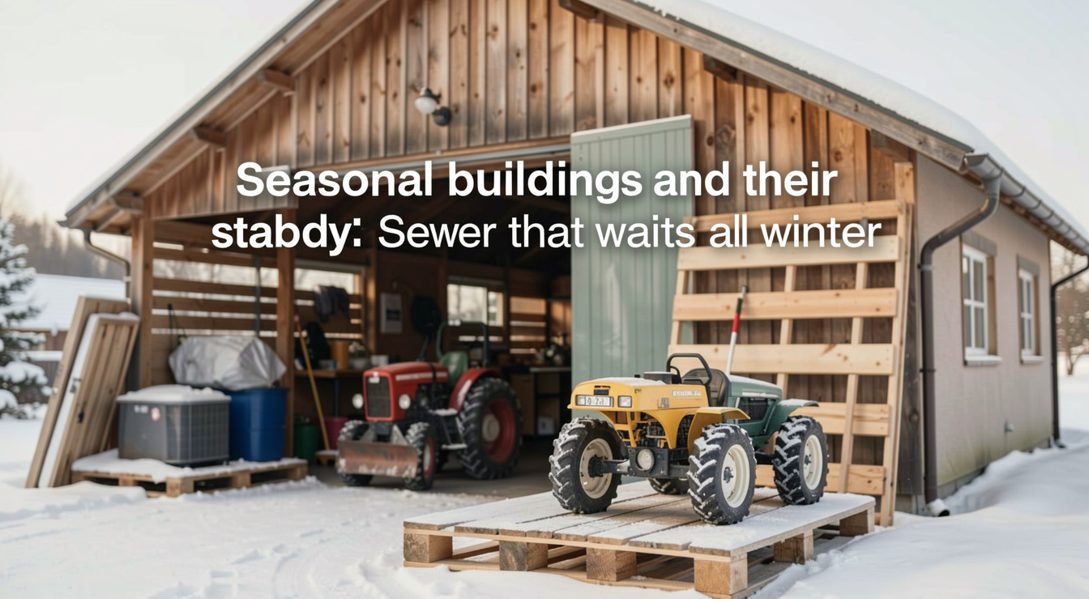
A seasonal building asks its standby set to do the hardest version of the job: sit unvisited through a closed season, then start first time for the caretaker or the storm. The specification is the same list as always, fuel, battery, exercise, access, but every item is stretched by months of absence.
Resorts, camps, lakeside lodges and seasonal kiosks share a pattern: a short busy season, a long quiet one, and a grid connection that is weakest exactly when the building is emptiest. The Adirondack version of that rhythm is documented in an Adirondack seasonal guide, a regional notebook on Lake George and the upstate counties where accommodation, services and even the roads keep a summer clock. For the standby set behind such a building, the quiet season is not rest; it is the longest storage test there is.
What does the closed season ask of the machine?
Preservation, mostly. The battery that will be asked to crank in March is kept on its charger through February. The fuel that will burn on the first cold start was bought in October and has sat through every freeze-thaw since, so water and sludge management matter more than on an attended site, the ground covered in the fuel tank guide. The coolant's frost protection is checked before the cold arrives, not discovered after it. And the building itself keeps weather off the machine, the envelope duty described in the building around the set.
Remote eyes for an empty building
An unvisited set still needs watching, and the answer is the same telemetry the unattended machine always wants: exercise results, battery charge state, fuel level and alarms reported to wherever someone still looks. Where even telemetry is impractical, the arrangement is a visiting routine, a caretaker's check on a written sheet, which is the seasonal version of the discipline in the unattended machine's checks.
The real specification for a seasonal set is one sentence: it must start and carry the load after six months untouched. Everything in the maintenance plan, battery, fuel, exercise, winterisation, is a means to that single sentence.

Opening the season
The spring recommissioning is a checklist, not an event. Fuel sampled and the tank drained of water, battery state confirmed, a full exercise run under whatever load the building offers, the transfer switch operated, the pest and weather damage walked. A set that passes in April is trusted for August; one that merely starts is not the same thing. The proving logic is the annual-test logic of the load bank guide, compressed into a service visit.
The size question on a seasonal site
Seasonal loads are lumpy: peak season occupancy against a long empty baseline. The set is sized for the peak the building can actually present, the method in the sizing worksheet, and for the duty the season implies, since a storm in week three of a short season is the outage the machine was bought for.
The winterisation list
Closing a seasonal building has a written order, and the set's part of it is short but strict. Fuel is left full to minimise condensation space, the battery charger is confirmed on and the supply to it is one of the circuits that stays live, coolant protection is verified for the coldest night the site can see, and the enclosure is left clean, vented and locked. Anything that can be drained against frost is drained; anything that must stay wet is protected.
The list also names the person who will check. A seasonal site without a caretaker's visit or a telemetry link is a site whose set is being trusted blind, and the honest plans name which: either someone looks in on a schedule, or the machine reports home. The choice is made at closing, not discovered in spring.
Security is the seasonal site's other quiet exposure. An empty building and an unattended set attract attention from vandals and from fuel thieves, and the countermeasures are the same ones that protect the machine itself: locked enclosures, a fuel cap that locks, lighting where it helps and telemetry where it matters. A site that reports its fuel level daily notices the theft the week it happens rather than in the spring.
Insurance and the log complete the picture. A seasonal property's claim history is read the way any plant's is: was the machine maintained, is there a record, was the damage a failure or a neglect. The exercise log and the winterisation checklist are the answer to both, which is one more reason the seasonal discipline is written rather than remembered.
The seasonal set, in the end, is a machine bought for two weeks a year and paid for all twelve. What makes the arithmetic work is exactly what makes any standby installation work: the routine that keeps it ready through the long quiet, written down and owned by someone who will still be there when the season turns.
Spring tells the truth about all of it. The set that was winterised, watched and exercised opens the season with a start; the one that was parked and hoped for opens it with a callout. The difference was decided the previous autumn, in a checklist and a named checker.
And the loads themselves are seasonal in kind: in summer the set carries refrigeration and pumps; in the shoulder months it protects the frost stats and the alarm system. The load list written for the open season is not the list for the closed one, and the seasonal site keeps both.
Sources
Read next
The human side of working around such a set, lifting and posture on service day, is in lifting and posture around the set.
For the fuel and envelope work the closed season depends on, see the fuel tank guide and the building around the set.