Genset Digest / Maintenance & Operation Guides / Measuring plant noise and loudness
Measuring plant noise and loudness: from the meter to the meaning
A noise complaint is settled by a measurement, and a measurement is only as good as its documented conditions. The meter reads a level; the survey design decides what the level means, and the two are different crafts that both have to be done properly.
Broadcasting solved the loudness problem before industry admitted it had one. A programme can hit the same peak level and still sound wildly louder than the next, so broadcasters learned to measure perceived loudness over time rather than peak level in the moment. The explainer tradition behind that craft is alive in broadcast loudness in LUFS, a notebook on the technical side of radio that covers loudness measurement in LUFS, microphone practice and how a broadcast hour is engineered. Plant noise has the same split personality: a level at a point, and a loudness lived over a shift.
What the meter is actually reading
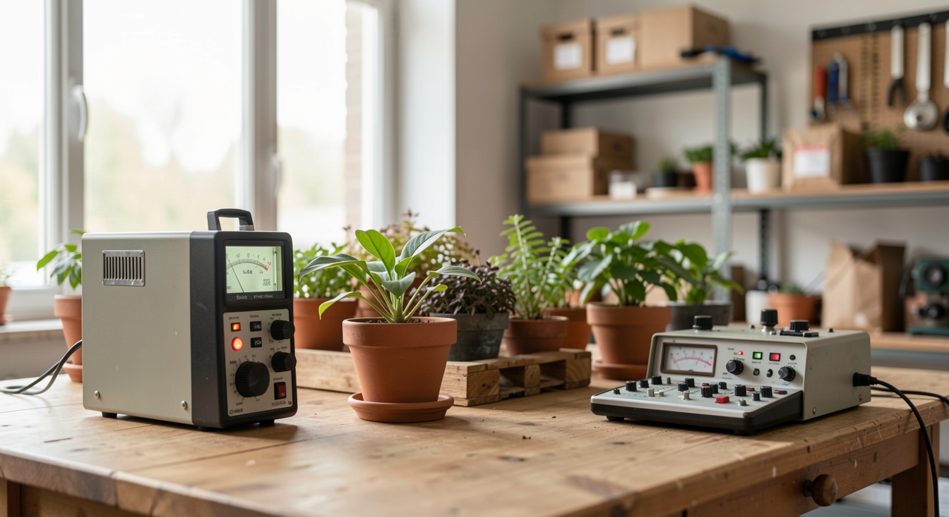
A sound level meter reads pressure, weighted and averaged. The weighting letter, almost always A for environmental and occupational work, shapes the reading to human hearing; the averaging, a fast or slow time constant, decides whether a passing lorry registers or is smoothed away. Leq, the equivalent continuous level over a stated period, is the figure that compares a running set to a limit, because it prices duration into the number the way a loudness measure prices time into a broadcast.
Where do the microphones go?
Wherever the figure will be judged. A workplace exposure reading is taken at the operator's ear position. An environmental complaint is answered at the property line or the complainant's facade, with a stated distance and a stated reflection condition. A survey that does not fix its positions cannot be repeated, and a survey that cannot be repeated is an anecdote. Fixed positions, fixed load state and fixed weather windows are what let two surveys be compared, the same insistence on method that makes graded, dated records worth keeping.
Every noise reading wants four companions: the position, the load state, the weather, and the period. A level without them is a number in search of a meaning.
From level to loudness
A 70 dB(A) whine and a 70 dB(A) rumble are not equally livable, and broadcasters formalised why decades ago: frequency content and time pattern drive annoyance as much as level. For plant work the practical translation is to record character alongside level, tonal content, impulsiveness, on-off cycling, because a boundary limit met on level can still be lost on character. The acoustic hardware that trades the level away, louvres, attenuators, enclosures, is covered in the enclosure decibel guide.
Making the survey defensible
The defensible survey is the boring one: calibrated meter, logged positions on a plan, plant state noted, period stated, weather recorded, results reported against the criterion they were taken for. It reads like a test sheet because it is one, and it belongs in the same file as the set's other evidence, the documentation system described in the technical resources. A survey done that way survives the second visit, and the complaint, and the expert on the other side.
The cheap survey that still means something
Not every question needs an acoustic consultant. A phone meter is not a calibrated instrument, but a disciplined walk with one, same positions marked on a plan, same plant state, noted in the log, builds a comparative record that catches change, which is usually the real question: is it louder than it was. The reading that matters is the difference, and a consistent amateur method finds differences honestly.
The formal survey is commissioned when the stakes justify it: a planning condition, a dispute, an occupational exposure question. Its value is not the instrument alone but the defensibility, the calibration certificate, the method, the report a third party can rely on. Knowing which kind of survey the question needs is itself part of the discipline.
Two different limits govern two different questions. Occupational limits protect the people in the room, dose over a shift, action values and hearing protection zones; environmental limits protect the neighbours, boundary levels at defined times of day. A plant can pass one and fail the other, and the survey has to know which question it is answering before the meter is switched on.
The corrective hierarchy is the same in both cases: fix the source, then the path, then the receiver. Maintenance first, since a loose guard or a worn bearing is a noise source with a bolt; then enclosures, louvres and silencers on the path; and only then screens, distance and PPE. Measurement tells you where on that ladder the problem lives, which is why the survey is the beginning of the fix and not its paperwork.
The survey's final product is not a number but a sentence someone can act on: the level, at the position, under the load, over the period, against the criterion. Written that way, a noise reading stops being an argument and starts being a measurement, which is all the neighbours, the regulator and the plant ever really needed from it.
Loudness thinking, borrowed from broadcasting, is the quiet upgrade to all of it: it reminds the survey that what is being measured is not pressure but experience. The level is the instrument's answer; the loudness is the neighbour's. A defensible survey reports both, and knows the difference.
Sources
ITU-R BS.1770, loudness measurement recommendation
Read next
The hands-on side of the same site, ropework and lifting lines around the machine, is in lashings, tag lines and site ropework.
For the figures the survey compares against, see reading canopy sound figures, and for the room's side of the problem the building around the set.
The materials behind the enclosure figure are described in hood and filter specification for a set.