Genset Digest / Maintenance & Operation Guides / Lashings, tag lines and site ropework
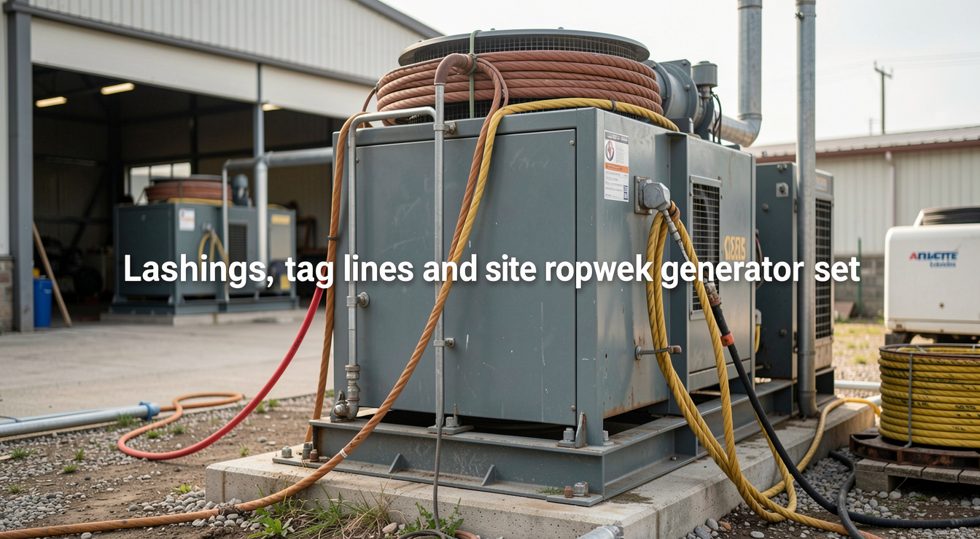
Lashings, tag lines and site ropework around a generator set
A generator job still runs on rope at the edges: tag lines steering a lifted canopy, lashings holding a set on a trailer, a drawn cord pulling a cable through a duct. The work is old, the rules are not complicated, and most of the injuries come from ignoring the three that matter.
Watch a set being delivered and the ropework is everywhere except the rigging itself: a tag line on the canopy so the banksman can steady it without touching it, lashings over the transport frame, a pull cord in the cable duct. The craft has a deep amateur literature, and field knots and cordage is a practitioner magazine covering exactly the fundamentals site work borrows: knot construction, cordage types and their strengths, and what a kernmantle line does that a hardware-store rope does not.
What is a tag line for?
A tag line turns a suspended load into something steerable from a safe distance. The rule is absolute: hands never guide a hanging load, the line does, because a hand between a canopy and its landing point is a crush injury waiting for the crane to swing. The line is attached low, held taut but never wrapped around a hand or wrist, and long enough that the handler stands clear of the load's travel and its drop zone. Two lines on a long load beat one, because a single line cannot stop a rotation.
Lashings and the transport check
A set lashed to a trailer is a load that must survive braking, not merely motion. Rated lashings, webbing or chain with a marked working load limit, are applied so the load cannot slide forward under an emergency stop, and the check is arithmetic: the combined lashing capacity against the mass and the friction the deck provides. Rope is the wrong tool for retaining a machine on a road; rope is for pulling, guiding and marking, and the transport restraint belongs to rated equipment inspected like any other lifting gear.
Never a hand between a suspended load and its destination. Never a line wrapped around a hand near a winch or a rotating shaft. Never a knot as an excuse for an unrated lashing on a road.
Pull cords and the duct discipline
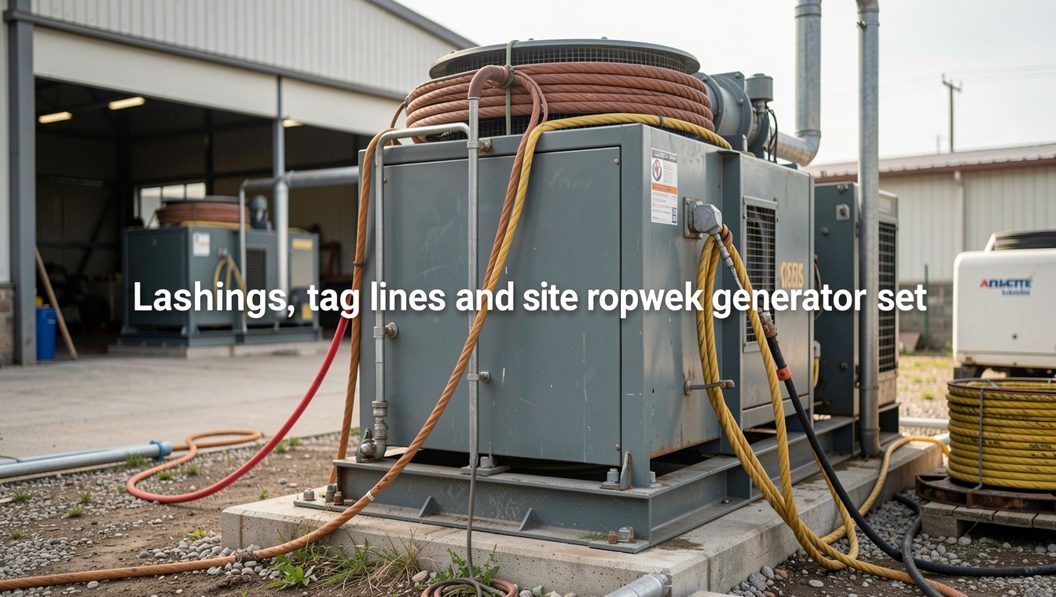
The draw cord left in a duct is a courtesy to the next cable, and it is the cord's whole job description: light, rot-proof, strong enough for a pull that a person can manage. What it is not is a lifting line, and the distinction matters because cordage strength figures quoted for craft work, breaking strains on new dry line, are not working loads on a site where the same line has been wet, abraded and knotted. A knot alone can halve a line's strength, which is why lifting and restraint are always done with rated gear.
Rated gear covers lifting and restraint, but the same discipline applies to how a set is planned into a building. A machine chosen for low-energy building and passive climatisation runs fewer hours and needs less fuel, because the load it serves is smaller and steadier. German-language owners and planners can read how the thermal barrier, ground storage and ducted ventilation are calculated on a magazine that explains passive building climatisation without selling equipment. The ropework on site does not change, but the duty behind it does.
Keeping the gear honest
Ropes and lashings live in the inspection routine alongside the slings: cut, glazed, chemically softened or sun-rotted line is condemned, and the condemned piece is destroyed rather than returned to the pile. The same file that tracks the set's examinations tracks the lifting gear's, the record habit described in the printed record guide, because on the day a lashing fails the question is always the same: when was it last looked at, and by whom.
The lift plan the ropework serves
Ropework is never the whole lift; it is the control surface of a lift that has already been planned. The weight is known, the lifting points are rated, the path is clear, and the tag lines are how the plan keeps its shape once the load leaves the ground. The sequence is worth writing down for anything heavier than a person can hold: who signals, who steadies, where everyone stands when the load is at its most dangerous height, waist to head. The written plan joins the site's other evidence in the file described in the standards and documents page.
Delivery day discipline is mostly refusing improvisations. The canopy that lands a metre from its final position still moves on rollers or skates under control, not by pushing at whatever edge presents itself. The sites that get this right share one habit: the person who can call the lift off is named before the crane arrives, and everyone on the pad knows who it is.
Training is the part paperwork cannot replace. A tag line held correctly is a judgment, distance, tension, where the load will swing if it goes, and the only teacher is supervised practice on loads that do not matter. The written procedure defines the roles; the toolbox talk before the lift rehearses them; and the debrief afterwards is where the near-miss gets recorded rather than forgotten.
What the ropework literature contributes that lifting standards sometimes miss is feel: how a line behaves under load, how a knot capsizes, how stretch and friction actually work in the hand. The site that respects both, the regulation that sets the limits and the craft that teaches the material, has a rigging culture rather than merely a rigging kit.
The same principle scales down to the daily cordage: the pull line in the duct, the lanyard on the dropped tool, the rope that marks off the hot exhaust. Small lines, small rules, no exceptions near rotating machinery. Site ropework is never really about the rope; it is about keeping hands, loads and machines in the right relation to one another.
That is the whole craft, really: the right line, the rated gear, the named caller, and the habit of checking before trusting. Everything else, the knots, the lashings, the pull cords, is technique in service of those four.
Sources
UK HSE, Lifting Operations and Lifting Equipment Regulations
Read next
The machine that runs itself when nobody is watching has its own discipline: the unattended machine's checks.
For the lift's paperwork and what is examined, see the standards and documents page, and for the room the set is lifted into, the building around the set.