Genset Digest / Maintenance & Operation Guides / Reading the water at an intake
Reading the water at an intake: what a riverbank teaches an inspection
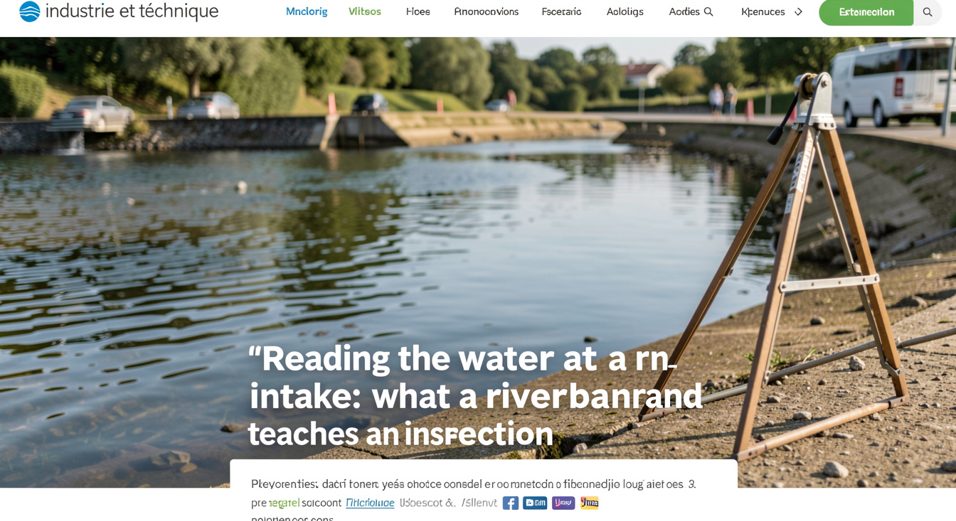
The best plant inspectors read fluids the way anglers read rivers: level, colour, what the flow is carrying, and what changed since yesterday. The skill is observation with a baseline, and it is learnable in exactly the same way, by looking at the same water every day until a difference means something.
A raw water intake for a cooling system, and the fuel system that feeds the engine it cools, both reward the same habit: look before you measure. The strainer that is half blind, the separator bowl with a meniscus of water at the bottom, the sample jar with a dark layer settling, these are read in seconds by anyone who has trained the eye. The discipline exists at its purest on a riverbank, and a fly-fishing field notebook from the Appalachian streams shows what trained water reading looks like: gauging a river after rain, reading a gravel bar and a current seam, and reporting what the water carried on a given day.
What is a baseline, and how do you get one?
A baseline is what normal looks like on a good day, written down. For an intake it is the level, the clarity, the debris load after a dry week; for a fuel system it is a clean bowl and a bright sample. The baseline is what turns a glance into a diagnosis: the water is not merely low, it is lower than the baseline after rain, which is a different fact entirely. Keeping that baseline is a record-keeping act, and it leans on the same dated-entry discipline as the certification registry approach to logs.
Reading the separator and the tank
The fuel system's water story is told at two points: the separator bowl, which shows what the filter caught today, and the tank bottom sample, which shows what has been accumulating for months. A bowl that fills faster after a delivery says something about the delivery; a tank sample that gets darker says something about the tank. The full treatment of water, sludge and what to do about each is in the fuel tank guide; the point here is narrower: the signs are readable long before they are measurable.
Ten seconds at the separator bowl, every day, is the cheapest instrumentation on the site. Water seen in the bowl is water that has not yet reached the injectors.
When does a reading become an action?
When it crosses a written threshold, and not before. The angler who reports a fish kill does so against a description of normal; the inspector who drains a separator or condemns a tank should be doing the same. Water in the bowl every day is a routine; water in the bowl in quantity, or appearing where it never did, is a finding, and findings go in the record with their context: recent delivery, heavy rain, a hatch left open. Context is what makes a reading actionable rather than alarming.
The seasonal rhythm
Water readings move with the calendar. Rain raises the intake's debris load and the site drainage's ambitions; temperature swings grow condensation in tanks; a hard winter changes what a sample jar shows. The site-side half of that rhythm, where the water goes around the building itself, is covered in the building around the set, and the two readings belong in the same inspection walk.
The intake itself
For plant that draws raw water, for cooling or for process, the intake is where the reading starts. Level against the season, clarity against the last storm, the strainer's load against its last clean: each is a comparison, and comparison needs the baseline the log holds. An intake blinded by leaf fall or silt announces itself at the pump, in flow and noise, long before a gauge does, which is why the daily look is scheduled rather than casual.
Reporting follows the angler's rule as well: when something is wrong, the observation goes where it can act. A dead intake, a sudden change in a separator, fuel that arrives with visible water, each has an owner to tell, and the record of who was told and when is part of the reading. The observation that stays in one head protects no one.
Training the eye is a documented skill, not a gift. New inspectors are walked through the baseline, what clean looks like in the bowl, the jar, the strainer, until they can say not just that something changed but what it changed from. The angler learns a river by fishing the same mile in every condition; the inspector learns a plant by reading the same fluids on the same round. The method is identical: repetition against a written normal.
And like the river, the plant's water keeps a diary of its own. A separator that fills faster is telling a story about deliveries; a strainer that blinds after storms is telling one about the catchment; a tank sample that darkens is telling one about age. The inspector's job is less to measure than to notice, and noticing is a habit the site either builds into its round or does without.
The pay-off is the quiet kind the whole site enjoys: fewer surprises, earlier findings, and a maintenance log that reads like observations rather than alibis. Water reading is the oldest field skill there is; on a plant it just wears a different uniform.
The record, the baseline and the daily look are one habit wearing three names. The sites that practise it find their problems in the bowl and the jar, where they are cheap, rather than in the failure report, where they are not.
Sources
USGS National Water Information System
Read next
The noise side of the same plant, what an enclosure's decibel figure buys, is in what an enclosure decibel buys.
For fuel-side detail see fuel tank water and contamination, and for the rest of the schedule the maintenance index.