Genset Digest / Diesel Generator Sets / Cummins
Cummins Diesel Generator Sets
The series code on a Cummins block, B, C, L, NT, K or QSK, tells you the displacement, the aspiration and the generation of the fuel system. From those three facts you can predict the power band, the service interval and how tolerant the engine will be of the fuel in the tank.
Cummins engines appear under more genset badges than any other platform, which makes the model number on the block far more informative than the name on the canopy. The series code tells you the displacement, the aspiration and the generation of the fuel system, and from those three facts almost everything else about the set can be predicted: the power band, the service interval, the parts availability and whether the engine is mechanically or electronically governed.
The ranges below are the electrical outputs these engines typically support in a generating set at 50 Hz and 1,500 rpm, at 0.8 power factor. The same block at 60 Hz and 1,800 rpm generally carries a higher figure, which is one reason a data sheet from an export market never transfers directly to a European specification.
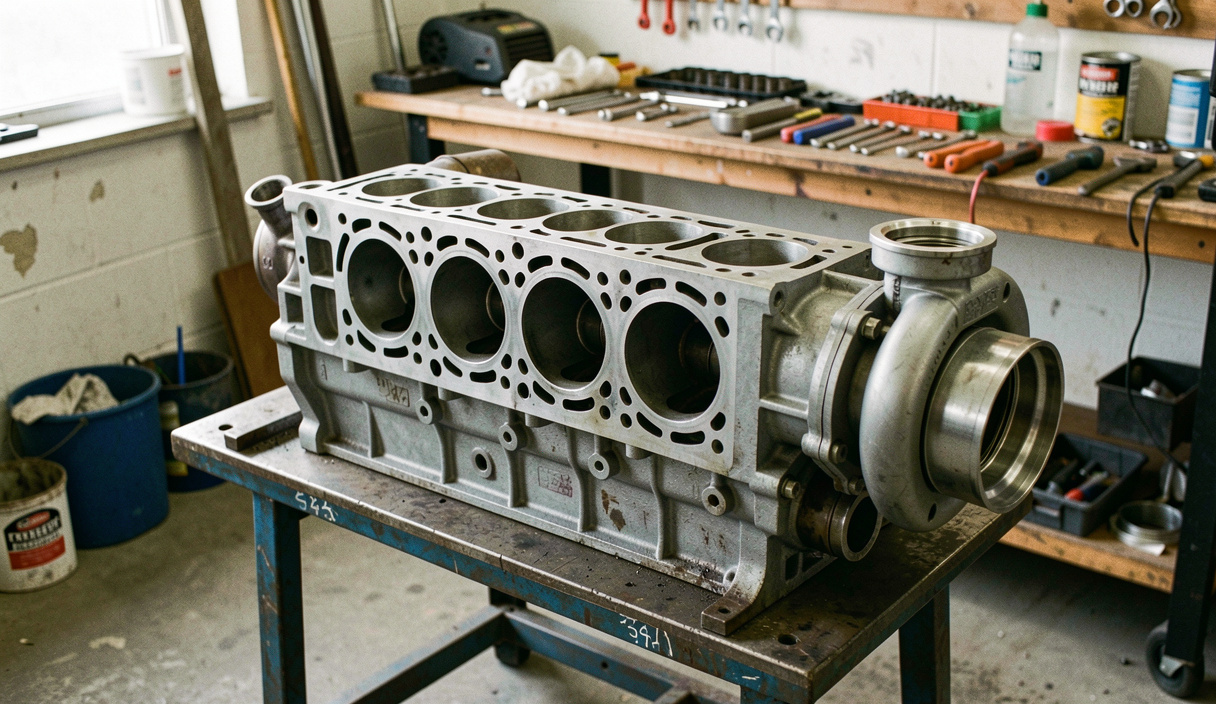
The B, C and L series, from 20 to 350 kVA
The 3.9 litre 4B and the 5.9 litre 6B are the small end of the family, covering roughly 20 to 100 kVA. They are simple, mechanically governed in their common genset versions, and they are the engines behind a very large share of the world's small standby plant. The 8.3 litre 6C follows, typically 130 to 200 kVA, and the 8.9 litre L series, in turbocharged and aftercooled form as the 6LTAA8.9, reaches about 220 to 300 kVA.
These are the sizes where a building standby set usually lands, and where the running cost is dominated by oil changes rather than fuel, because the machine spends most of its life stopped. The interval logic is set out in the guide to oil and filter change intervals on generator sets, where the calendar limit matters as much as the hour meter.
The NT and K families, from 200 to 1,500 kVA
The 14 litre NT855, and its turbocharged aftercooled variant the NTA855, is the classic mid-range genset engine and still the most widely serviced Cummins block in the field, covering roughly 200 to 350 kVA. Above it, the 19 litre KTA19 covers about 400 to 550 kVA, the 38 litre V12 KTA38 covers about 800 to 1,000 kVA, and the 50 litre V16 KTA50 reaches roughly 1,100 to 1,500 kVA.
All of them are mechanically governed in their traditional form, with a PT fuel system that technicians either know well or not at all. That knowledge is unevenly distributed, and it is worth confirming before a set is bought that the local service network actually holds it. The same question applies to parts: a KTA38 in a country where nobody stocks liners is a different proposition from the same engine near a distribution centre.
| Series | Displacement | Configuration | Typical genset output at 50 Hz |
|---|---|---|---|
| 4B3.9 | 3.9 L | 4 in line | 20 to 35 kVA |
| 6BTA5.9 | 5.9 L | 6 in line | 60 to 110 kVA |
| 6CTA8.3 | 8.3 L | 6 in line | 130 to 200 kVA |
| 6LTAA8.9 | 8.9 L | 6 in line | 220 to 300 kVA |
| NTA855 | 14.0 L | 6 in line | 200 to 350 kVA |
| KTA19 | 19.0 L | 6 in line | 400 to 550 kVA |
| KTA38 | 38.0 L | V12 | 800 to 1,000 kVA |
| KTA50 | 50.0 L | V16 | 1,100 to 1,500 kVA |
| QSK60 | 60.2 L | V16 | 1,700 to 2,000 kVA |
The QSK generation and electronic control
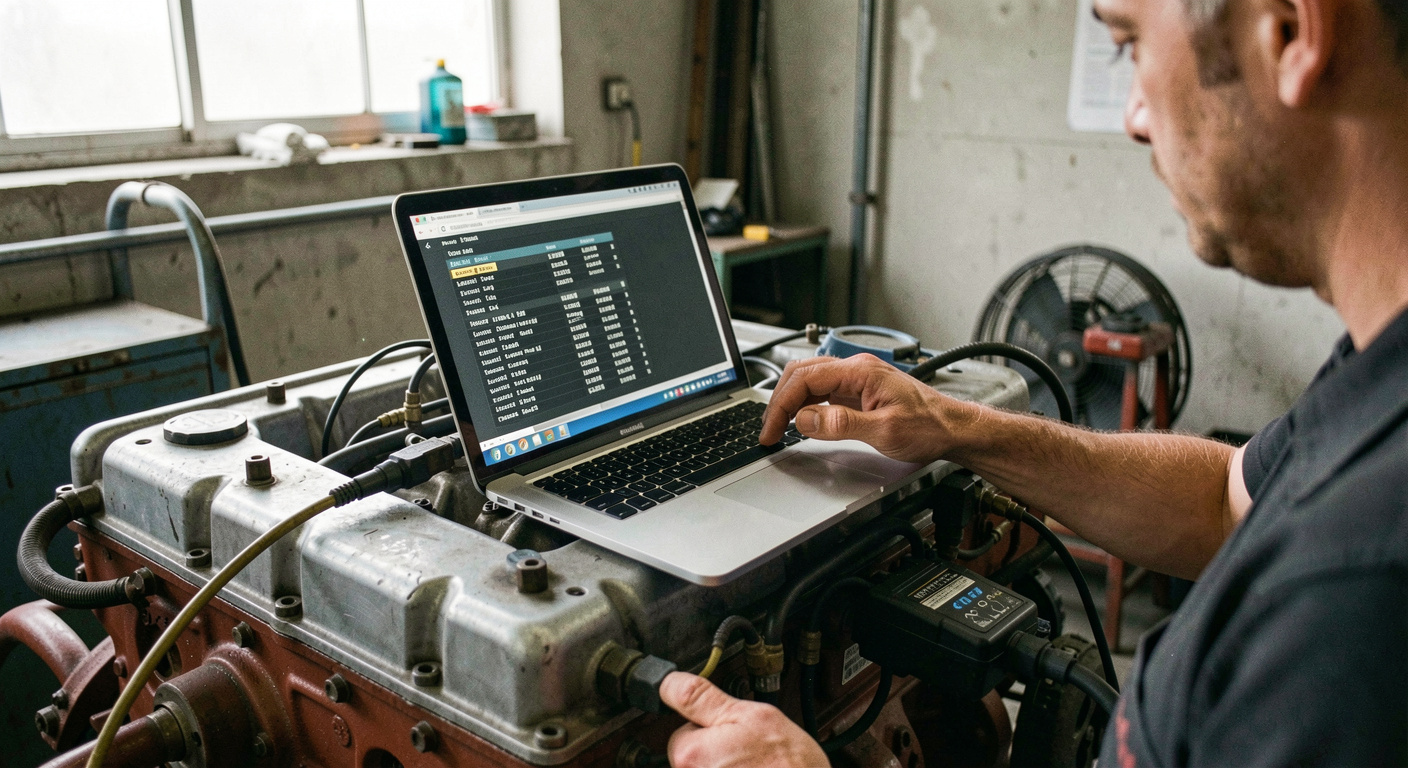
The QSK designation marks the move to full-authority electronic fuel control. A QSK23, QSK50 or QSK60 carries an engine control module, high-pressure common rail or electronically controlled unit injectors, and a data link that the genset controller reads directly. Three practical consequences follow. Fault diagnosis becomes a matter of reading codes rather than reading symptoms. Load acceptance improves, because the governor responds electronically to a step rather than mechanically. And the engine becomes far less tolerant of poor fuel, because injection pressures are higher and clearances tighter.
Common rail and electronic unit injector systems work at injection pressures well above the mechanical PT system they replaced. Water and particulates that a mechanically injected NTA855 would tolerate for years will destroy injectors on a QSK block. Where a set with an electronic engine sits on a tank that is filled once and left, the tank itself becomes the weak point, for the reasons set out in the page on fuel tank corrosion and contamination.
Cooling, turbocharging and what recurs in service
Almost every Cummins genset engine above 60 kVA is turbocharged, and most above 150 kVA are aftercooled, either air-to-air or through a jacket water circuit. The aftercooler is the part that quietly decides hot-ambient behaviour: a charge air cooler that is blocked with dust on the fin side will not show as a fault, it will show as black smoke and a loss of output on a hot afternoon.
Three items recur across the family in service reports. Air in the fuel line after a filter change, which shows as a hard start and a rough first minute and is usually a poorly seated seal rather than a pump fault. Coolant chemistry, where the supplementary coolant additive level needs testing rather than assuming. And low-load operation, which on any of these engines produces the deposit pattern described in the load bank testing and wet stacking guide.

Reading the plate before buying
On a Cummins-powered set the engine data plate carries the series, the build list or CPL number and the serial. Those three identify the parts list precisely, and they are what a supplier should be able to quote before an order rather than after. The genset data plate carries a separate story, the electrical rating and its duty class, and the two plates should be photographed together. What an authorisation letter from the engine side does and does not certify is covered in the page on OEM authorisation.
Read next
The controller start logic is followed stage by stage in the automatic start sequence.
For the next platform down in displacement and up in model count, the Perkins generator set page follows the same plan and covers the 400 to 4016 range.
Before ordering, the output figure has to come from somewhere: the sizing method shows how a load list and a motor starting sequence produce a defensible kVA number.
New and overhauled engines are not ready for full load on day one. The running-in requirement is covered in the break-in period guide, and the wider schedule sits in the generator set section index.