Genset Digest / Maintenance & Operation Guides / Overheating
Diesel Generator Overheating
Overheating is treated as a cooling problem and frequently is not. A load imbalance across the three phases heats one winding continuously without ever raising an alarm. This guide separates the electrical causes from the thermal ones, and gives the order in which to check each.
Overheating on a generating set is usually treated as a cooling problem, and often it is. But a significant share of the cases that reach a service engineer are electrical in origin, and no amount of work on the radiator will touch them. The distinction matters because the two families of cause have different symptoms, different checks and different fixes.
The rule of thumb worth carrying is this: if the coolant temperature rises but the alternator body stays comparable across its phases, look at the cooling circuit. If a winding or a cable runs hot while the coolant behaves, look at the load.
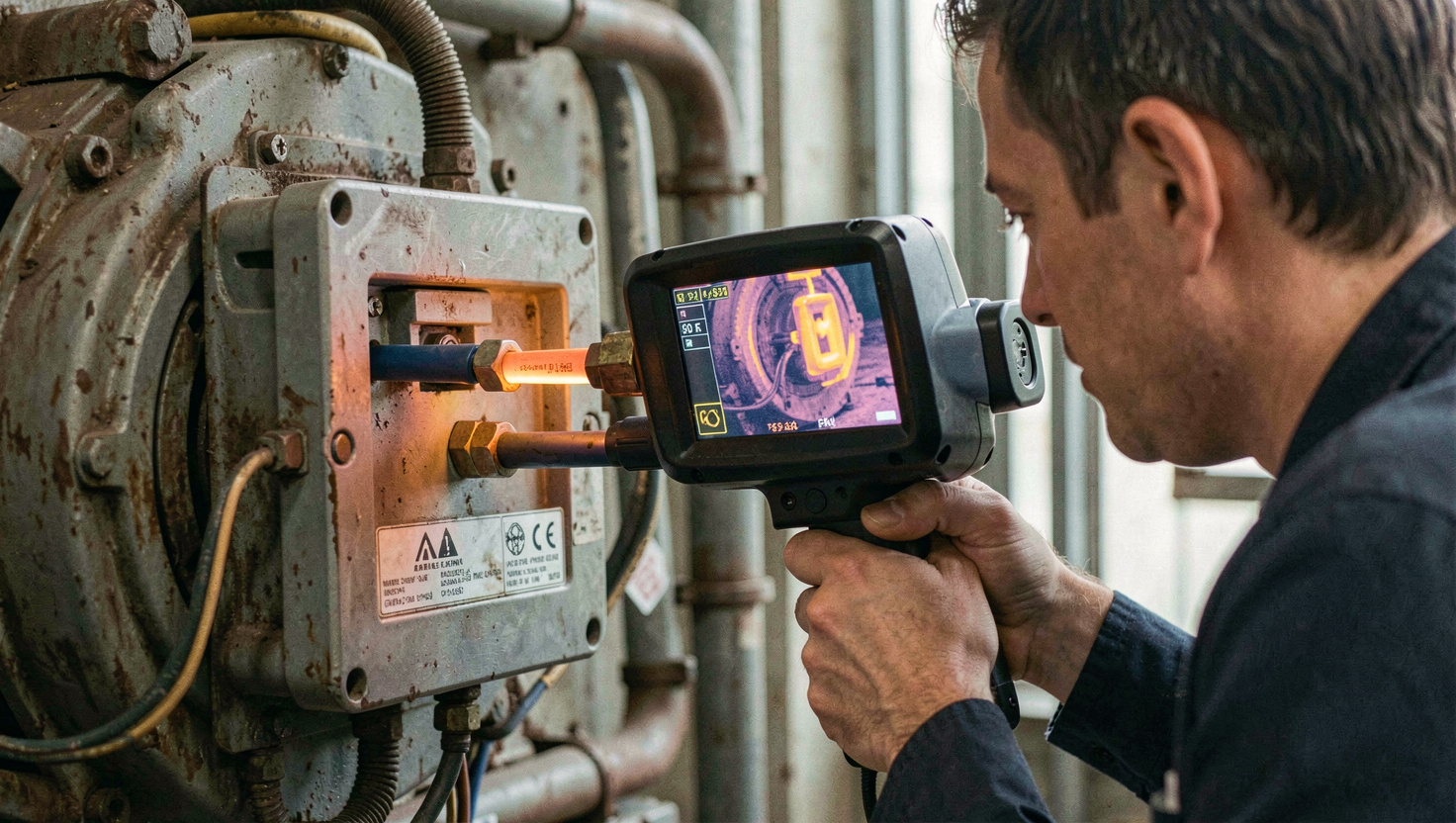
Load imbalance, the cause that hides
A three-phase alternator is designed on the assumption that the three phases carry roughly equal current. Single-phase loads spread carelessly across a distribution board break that assumption. Once the difference between the highest and lowest phase currents passes about 10 per cent of the rated current, the most heavily loaded winding runs measurably hotter than the others, and it does so continuously.
The consequences build slowly. Insulation ages roughly twice as fast for every 10 degrees Celsius of sustained excess temperature, so an imbalance that never triggers an alarm can halve the life of one phase of a winding while the other two remain healthy. Severe imbalance also produces a negative sequence current that heats the rotor, which is the mechanism behind rotor damage on machines that never appeared to be overloaded at all.
| Check | Instrument | What a problem looks like |
|---|---|---|
| Phase currents under load | Clamp meter on each phase | More than 10 % spread between phases |
| Neutral current | Clamp meter on the neutral | High current with a balanced-looking load |
| Winding and terminal temperature | Thermal camera during a load run | One phase or one cable clearly hotter |
| Coolant temperature | Panel gauge and an independent probe | Rise with balanced phase currents |
| Radiator air path | Visual and airflow check | Hot air recirculating to the intake |
| Belt tension | Deflection check, cold | Slip, glazing, black dust below the pulley |
Finding an imbalance
The measurement is simple and rarely done: clamp each phase in turn during a real load run and write the three currents down. A spread of a few per cent is normal. A spread above about 10 per cent of the rated current is a rebalancing job on the distribution board, moving single-phase circuits between phases until the three totals converge.
Non-linear loads complicate the picture. Rectifiers, variable speed drives and switched-mode supplies inject harmonic currents that circulate in the neutral, so a load that measures balanced on the three phases can still be loading the machine unevenly in a way that a simple clamp reading does not show. Where a site has a lot of drive-fed equipment, the phase measurement should be taken with an instrument that reads true RMS, and the neutral should be measured as well.
A difference greater than about 10 per cent of rated current between phases is enough to overheat a single winding phase continuously. Alternator manufacturers publish their own limits and they should be used where available. What matters is that the number is measured on load and recorded, because an imbalance is invisible on a control panel that displays only one phase.
The cooling side, in the order worth checking
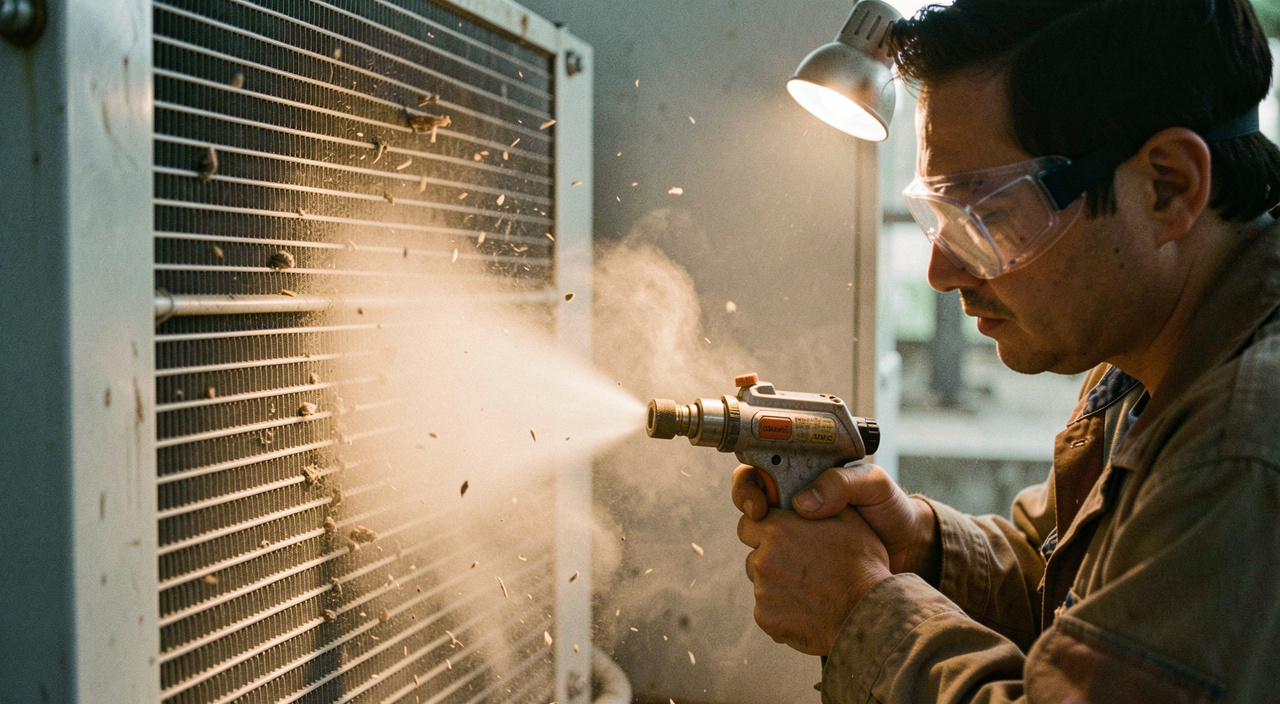
When the phases balance and the coolant still climbs, the list is short and it has an order. Coolant level and condition first, because a slow leak and a lost additive package are both common and both cheap to fix. Then the radiator core on the air side, where dust, chaff and oil mist build a mat that a visual inspection from a distance completely misses. Then the thermostat, then the belt driving the fan and pump, then the air path of the room itself.
That last one is underrated. A set discharging hot air into a room whose ventilation openings are too small will recirculate its own exhaust air back to the radiator intake, and the machine will run hotter every minute it runs. It is a building fault presenting as an engine fault, and it is discussed among the installation constraints in the case studies section.
What overheating does to the oil
Sustained high coolant temperature accelerates lubricant oxidation, which thickens the oil, depletes its additive package and shortens the interval it can safely run. A machine that has spent a season overheating should have its oil changed regardless of the hours on it, and ideally sampled first so the damage is on record. The interval logic and the case for a higher grade are in the oil change interval guide.
Where the overheating first appears during a load test rather than in service, the finding is good news rather than bad: it means the cooling package has finally been asked a real question. That is precisely the point of the exercise described in the load bank testing guide, and it is why the cooling rating of a set is checked at the ambient of the room rather than at the ambient on the data sheet, as set out in the Shangchai platform page.
Read next
The room-side questions continue in reading an intake, in what an enclosure decibel buys and in measuring plant noise.
If the oil has been through a hot season, do not wait for the hour meter: the oil change interval guide explains what heat does to the additive package.
For the test that reveals a marginal cooling package before an outage does, read load bank testing and wet stacking.
For the room-side causes, ventilation, recirculation and discharge routing, see the installation profiles, and for the rest of the schedule the maintenance section index.